Privacy and comfort
Think about sightlines, height, neighbors, patios, and the way the yard is used.
 Request an Estimate
Fence planning guide
Use this guide to organize goals, compare materials, and prepare for a useful estimate conversation.
Request a free estimate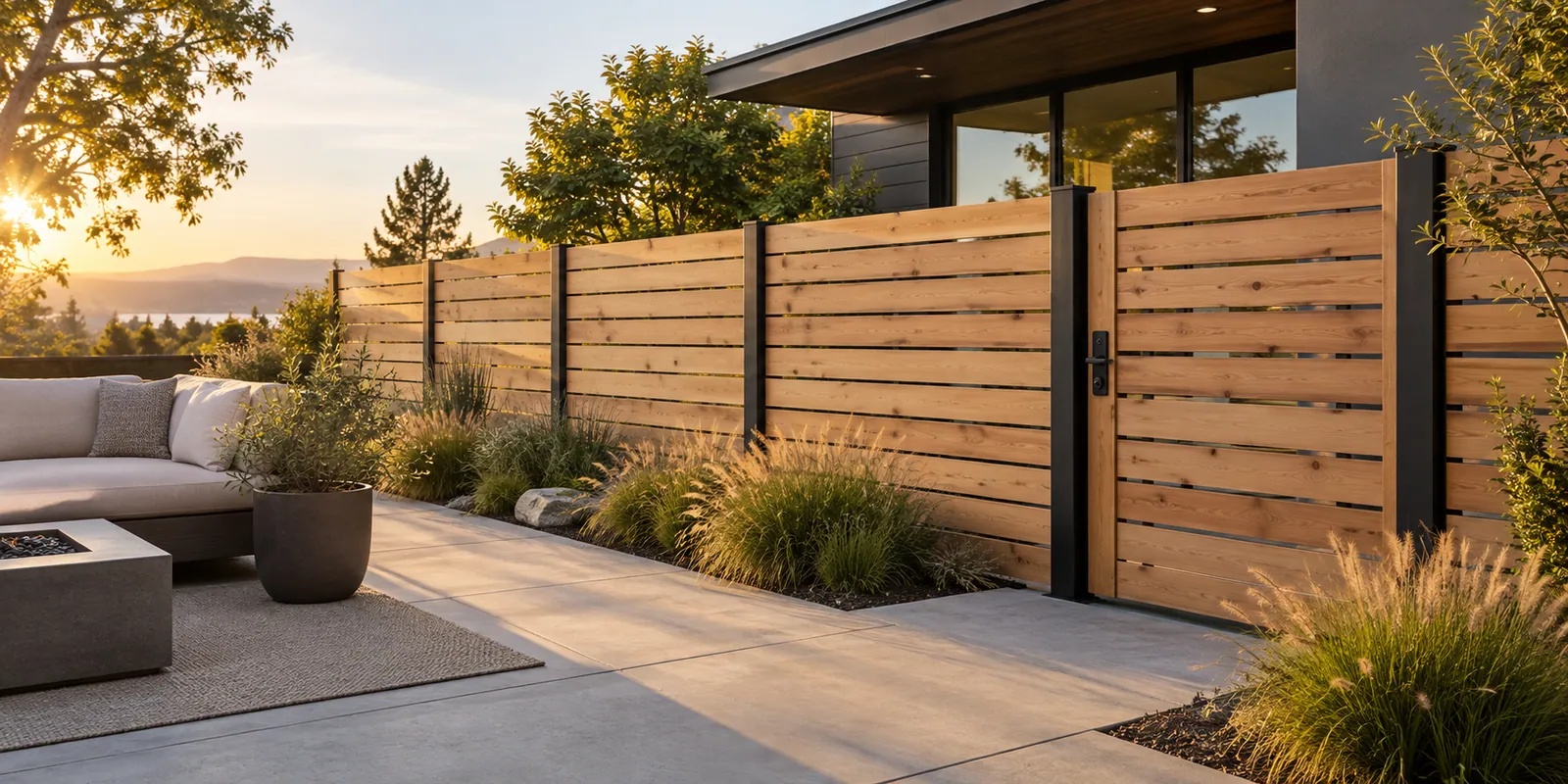
Think about sightlines, height, neighbors, patios, and the way the yard is used.
Consider spacing, gates, ground clearance, digging, climbing, and household routines.
Decide how much cleaning, staining, sealing, adjustment, or seasonal care you want to manage.
Coordinate the material, profile, color, and details with the home and landscape.
Plan pedestrian gates, equipment access, driveways, latches, and everyday movement.
Verify property boundaries, utilities, permits, HOA rules, pools, and other applicable requirements.
| Material | Best for | Maintenance | Privacy | Typical lifespan |
|---|---|---|---|---|
| Wood | Natural style and flexible privacy | Periodic | High | Varies |
| Vinyl | Privacy and low upkeep | Low | High | Long |
| Aluminum | Open views and decorative boundaries | Low | Low | Long |
| Chain link | Practical boundaries and visibility | Low | Low | Long |
Start with the job: privacy, pets, pools, security, views, wind, maintenance, or architecture. Then compare cedar, vinyl, aluminum, steel, and chain-link against those priorities and the property conditions.
Property lines, easements, utilities, irrigation, grade, drainage, rock, access, trees, retaining walls, sidewalks, sight triangles, historic status, floodplain conditions, and HOA rules can all shape the plan.
Look for material and style, approximate footage and height, posts and footings, gates and hardware, demolition, disposal, access assumptions, finish work, permit responsibility, exclusions, schedule assumptions, payment terms, and warranty information.
A locate request must be completed before digging. Colorado 811 says public utility owners generally have three full business days to respond; private lines such as irrigation, propane, septic, detached-building power, or an invisible pet fence may require a separate private locate.
Early communication can prevent surprises about access, removal, appearance, pets, and boundary assumptions. A neighbor agreement does not replace reliable property-line information or any document required by the local jurisdiction.
Tell us about your property, priorities, and the result you want.