Best fit
Practical pedestrian, service, equipment, pet, and vehicle openings where visibility and durable everyday function matter.
Read the guide Request an Estimate
Chain-link gates
Blue Squirrel installs chain-link swing and access gates for homes, commercial yards, utility areas, pets, and equipment sites across the Front Range. We match frame, mesh, posts, hinges, latches, and opening width to the job.
Request a free estimate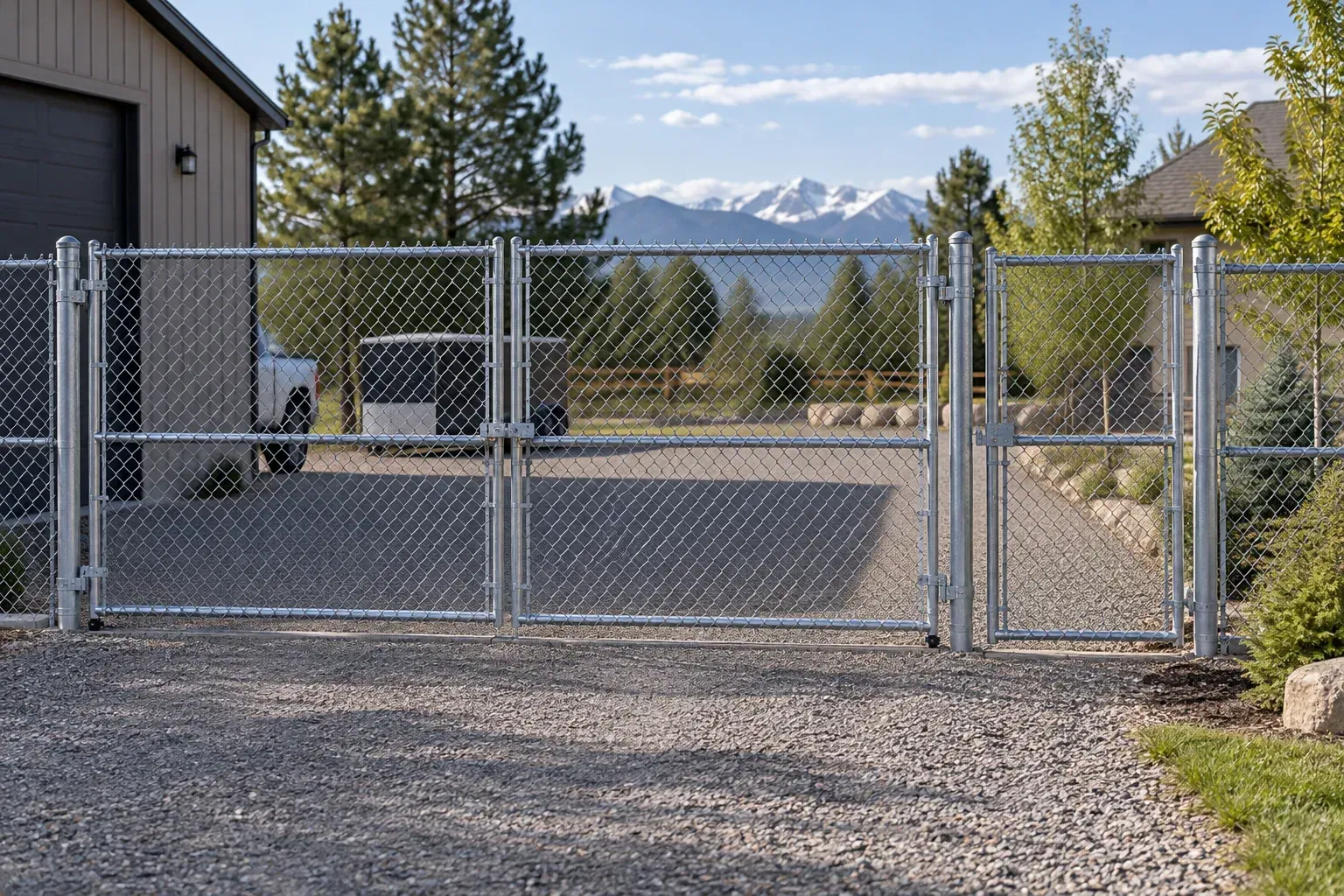
Practical pedestrian, service, equipment, pet, and vehicle openings where visibility and durable everyday function matter.
Read the guideLarge or frequently used openings may need heavier frames, stronger posts, drop rods, wheels, cantilever hardware, or a different gate configuration.
Read the guideOpening width, height, framework, coating, posts, hardware, grade, access control, demolition, and site access affect the scope.
Read the guideOur process
We verify clear width, users, swing or slide space, grade, post support, latch needs, and how the gate ties into the chain-link system.
We review the fence line, grade, access, gates, drainage, privacy, pets, and the way the property is used.
We confirm materials, heights, posts, gates, removals, finish details, responsibilities, and pricing in writing.
The crew lays out the work, installs the system, checks alignment and hardware, and keeps the work area organized.
We test gates, review the completed fence, explain care and warranty information, and document any final adjustments.
Double-swing, cantilever slide, rolling, and track-gate configurations serve different widths and site conditions. Traffic, grade, snow, available slide room, security, and automation determine the best choice.
Sometimes, but screening increases wind load substantially. The gate frame, posts, hinges or rollers, latching, and operator must be evaluated before adding slats or fabric.
Yes. Keypads, card readers, telephone entry, vehicle detection, and other controls can be integrated when the gate, operator, power, safety devices, and usage are designed together.
Common causes include post movement, hinge wear, frame distortion, loose fittings, inadequate bracing, and changing grade. Large gates also need enough structural capacity for their width and use.
It may be possible, but a gate suitable for occasional manual use is not automatically suitable for an operator. Geometry, frame rigidity, posts, travel path, safety devices, and power should be assessed first.
Tell us the clear opening, users or vehicles, desired height, security needs, and project location.