Why price per foot is only a starting point
Linear footage is useful for estimating material quantity, but it does not describe a project. Two fences with the same length can require different post systems, gate assemblies, grade transitions, access methods, removal, and cleanup. A universal price-per-foot answer usually hides the assumptions that matter most.
A responsible estimate begins with the plan described in our Boulder County fence planning guide and turns that plan into a written scope.
The exact material system
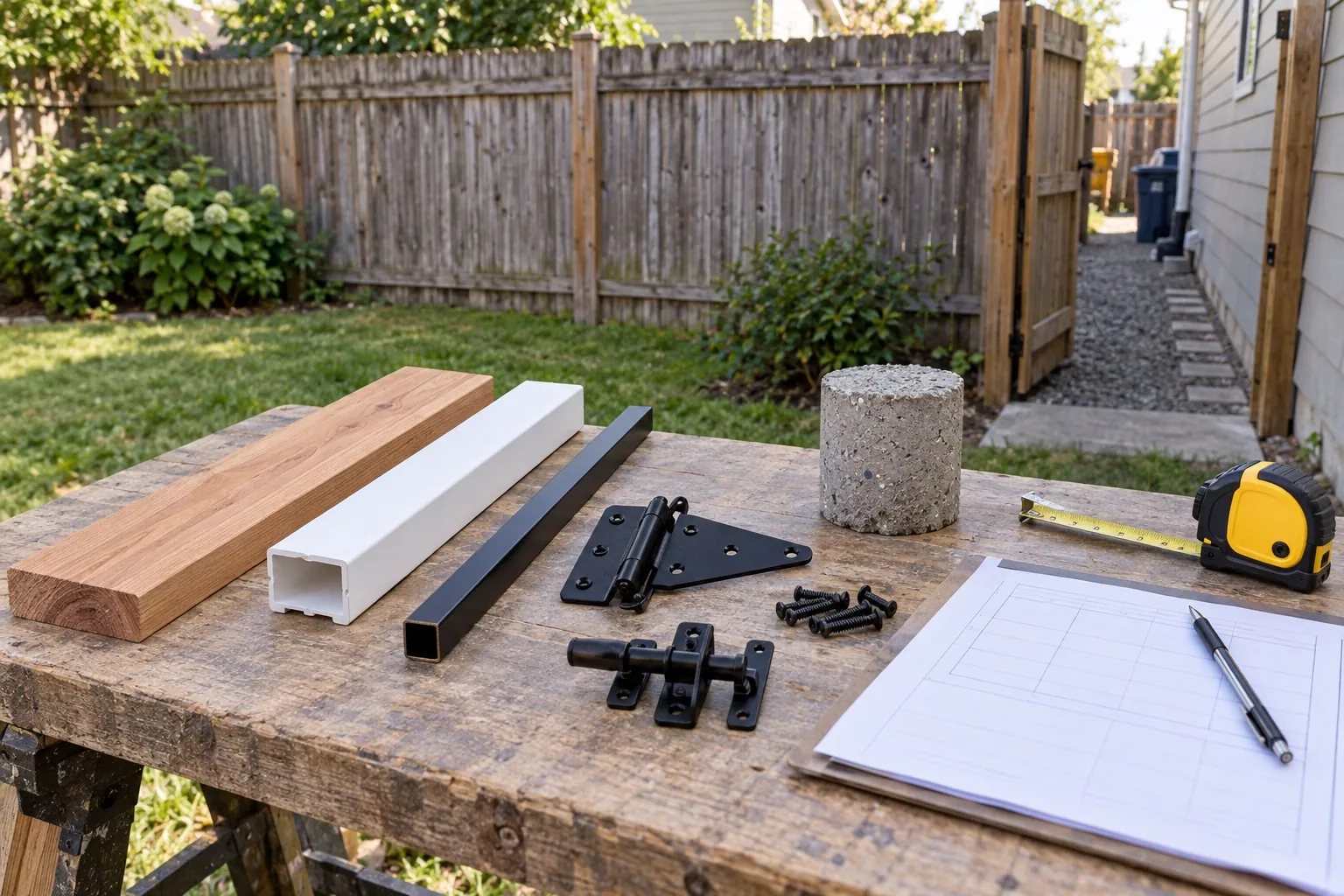
Material category is not specification. Wood species and grade, board profile, rail and post dimensions, fastener choice, finish, vinyl manufacturer and panel construction, metal alloy, picket and rail dimensions, coating system, and hardware quality all affect material and labor. Ask for enough detail to compare like with like.
Height, layout, and transitions
Taller sections use more material and can require different structural details. Corners, changes in direction, stepped or racked sections, mixed materials, returns to a house, and connections to existing fences all add layout decisions. A simple rectangle on level ground is not the same project as a line with several transitions.
Gates are small sections with big responsibilities
A gate concentrates movement and leverage into a few posts and hardware points. Width, leaf count, frame construction, hinges, latches, stops, automation readiness, and grade clearance matter. Wide access gates and frequently used pedestrian gates should be priced as specified assemblies—not treated as ordinary fence panels.
Site conditions and access
- Rocky, compacted, wet, or otherwise difficult digging conditions.
- Slopes, retaining walls, drainage features, and abrupt grade changes.
- Limited paths for carrying materials or removing debris.
- Mature landscaping, roots, irrigation, and structures near the line.
- Work-hour, parking, or access restrictions from an HOA or tight neighborhood site.
Removal, preparation, and restoration
Clarify whether existing-fence removal, hauling, disposal fees, brush clearing, post extraction, soil handling, and minor surface restoration are included. If the yard must remain secure for pets, temporary containment or phased work may also affect the plan. These items are easy to omit from a headline number and expensive to discover later.
How to compare two fence proposals
The goal is not to choose the longest proposal. It is to understand what will be built and what could change. Use our estimate preparation guide to make the first site visit more complete.
- Confirm the same fence lines, heights, and gate locations.
- Compare exact materials, posts, rails, fasteners, coatings, and hardware.
- Match demolition, disposal, preparation, cleanup, and restoration.
- Identify allowances, unresolved conditions, exclusions, and owner responsibilities.
- Review payment terms, change-order process, product coverage, and workmanship coverage separately.
A note about published price ranges
Material markets, labor, access, and product availability change. Any useful published range needs a date, a defined specification, and stated assumptions. Blue Squirrel prefers to explain the drivers and prepare a property-specific scope rather than promise a universal number that may not apply to your yard.