Plan the property before you choose the product
A fence succeeds or fails in the details around it. Before comparing cedar, vinyl, aluminum, or steel, identify what the fence must accomplish: privacy at a patio, safe circulation for a dog, separation around a pool, a better entry sequence, or a durable boundary that still preserves a view. Those goals determine where solid screening belongs, where an open fence is more appropriate, and where gates need to work every day.
This guide is the hub for Blue Squirrel Fence Co.’s planning library. Use the supporting articles on permits and property lines, preparing for an estimate, and the factors that shape project cost when you are ready to go deeper.
Define the job the fence needs to do
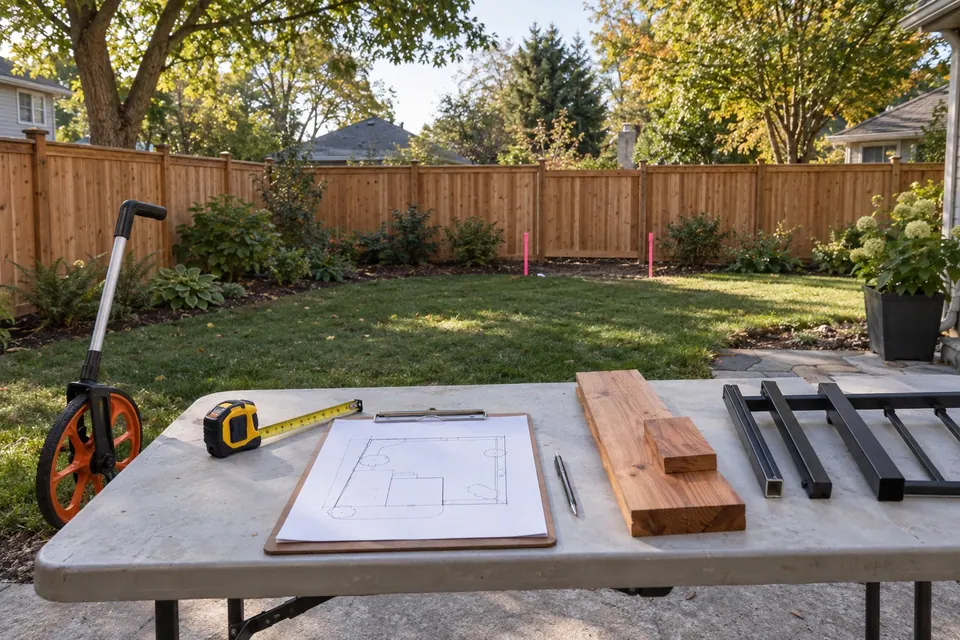
Walk the yard at the times you use it most. Notice the view from seated height, the route from the driveway to the backyard, where children or pets naturally move, and which windows or neighboring spaces actually create a privacy concern. A uniform fence around every edge can be less useful—and less attractive—than a plan that responds to individual zones.
- Privacy: identify exact sight lines instead of treating height as the only solution.
- Access: map daily foot traffic, bins, lawn equipment, deliveries, and emergency access.
- Containment: consider the size, behavior, and habits of pets without relying on fence height alone.
- Appearance: decide where the fence should recede and where a gate or material transition can become a focal point.
- Maintenance: be realistic about the care, cleaning, and finish renewal you are willing to perform.
Confirm the line, approvals, and underground conditions
A contractor can help you understand the installation area, but a contractor does not create a legal property boundary. Locate your survey or improvement location certificate and resolve uncertainty before layout. Also review recorded easements, HOA requirements, and local rules. Requirements can vary by municipality, zoning district, corner-lot visibility, historic status, floodplain, and fence height.
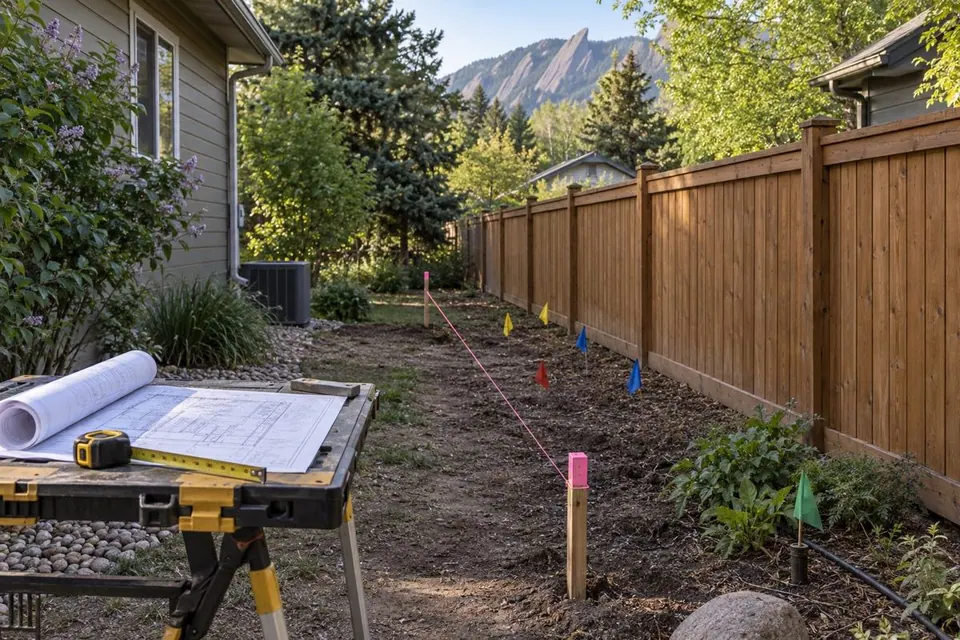
The City of Boulder fence and retaining wall permit guide is a useful starting point for work inside the city, but the official jurisdiction and current rules should always control. Before posts are excavated, submit a locate request through Colorado 811 and separately identify private lines such as irrigation, lighting, propane, or outbuilding power that a public utility locate may not mark.
Design gates as working parts of the property
Gates are the most frequently operated and mechanically demanding parts of many fence systems. Their location, width, swing, grade clearance, post support, latch, and hardware should be specified—not improvised after the line is set. A gate that looks centered on a plan may be inconvenient if it conflicts with a downspout, slope, parked vehicle, or the natural route to the patio.
List everything that needs to pass through: wheelbarrows, trash bins, lawn equipment, bikes, trailers, or future landscape machinery. Then discuss whether one wider access gate and one everyday pedestrian gate would serve the property better than several identical openings. Explore the available gate systems before finalizing the layout.
Let grade, drainage, and access shape the design
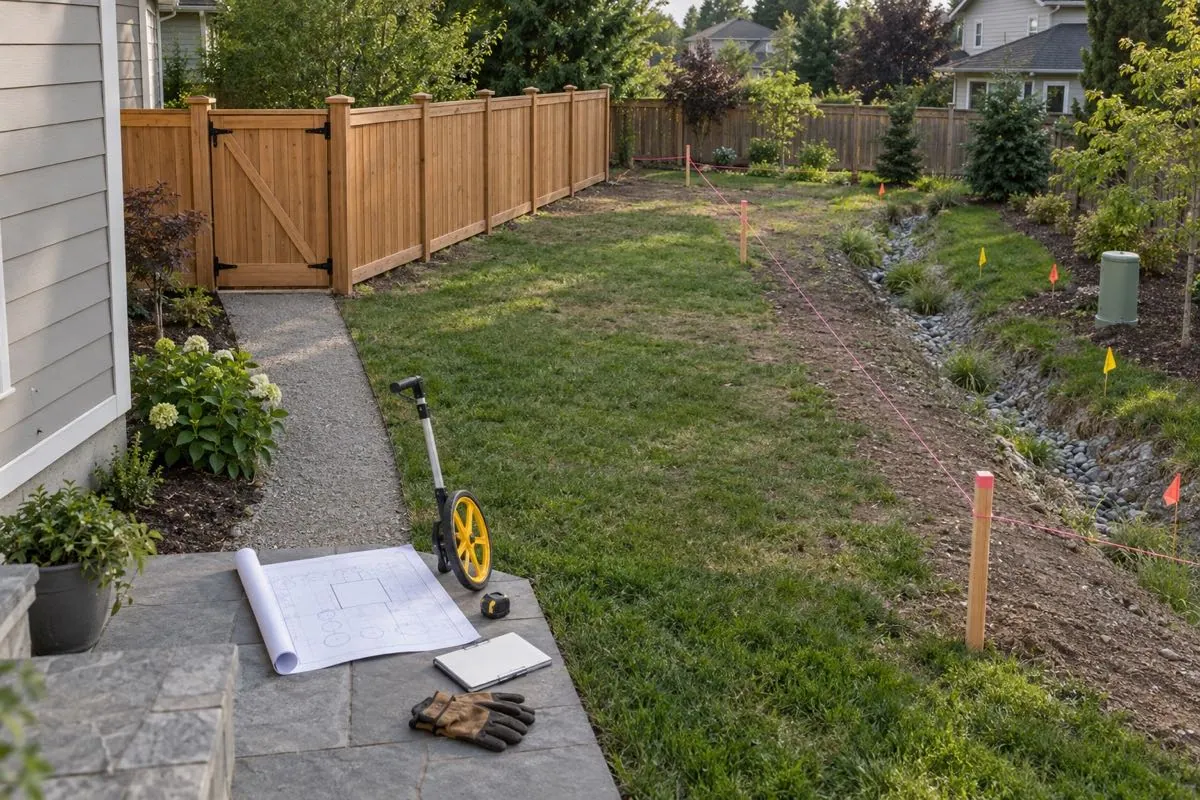
Front Range properties are rarely blank, level rectangles. Grade changes affect the relationship between the bottom of the fence and the ground; drainage swales must keep working; mature roots and established planting can restrict post locations; narrow side yards can limit how materials and equipment reach the work area. These conditions should be discussed during the site walk and reflected in the proposal.
On a slope, ask whether the chosen system will rack with the grade, step in sections, or require another transition. Each approach creates a different silhouette and different gaps. The correct choice depends on the material, the terrain, containment needs, and the view you want from the house.
Compare complete systems, not category labels
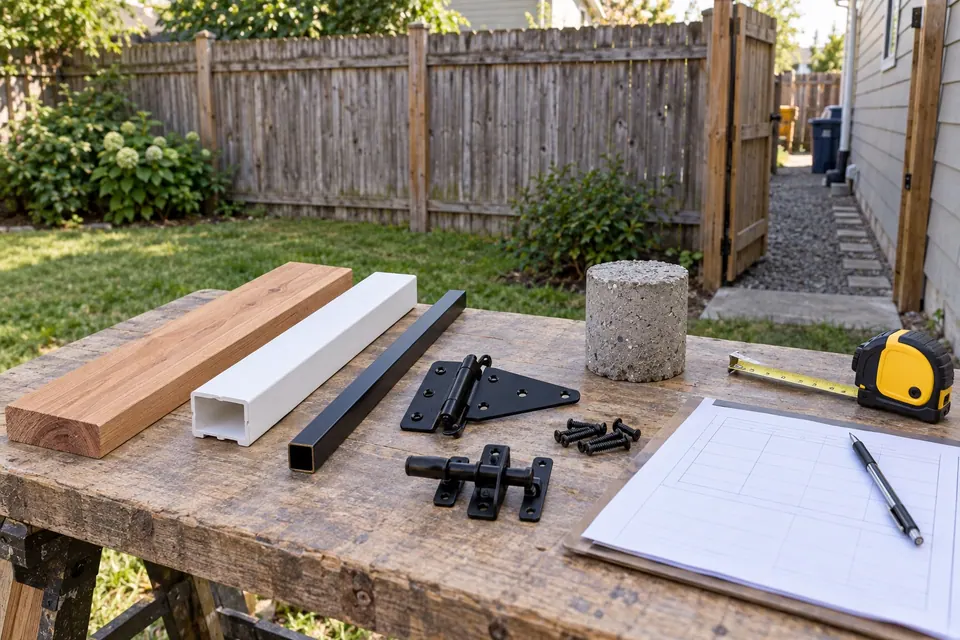
“Wood fence” and “vinyl fence” are not complete specifications. Species, grade, profile, post dimensions, fasteners, rails, finish, manufacturer, panel construction, and hardware all matter. Compare proposals line by line and ask for the exact product or construction method being offered. Our Colorado fence materials guide explains the tradeoffs in more detail.
Demand a written scope you can actually compare
A useful proposal describes the layout, approximate quantities, material system, fence height, gate details, removal, disposal, site preparation, cleanup, exclusions, payment schedule, and written workmanship coverage. It should also state which items remain the owner’s responsibility, such as survey confirmation, HOA approval, vegetation removal, or private utility identification.
Do not compare two totals until you have compared what each total includes. A lower number can reflect a different product, fewer gates, less preparation, or missing disposal. Read what changes the scope and cost of a fence project before evaluating proposals.
A practical sequence from idea to installation
Ready for a property-specific conversation? Start with our fence estimate preparation checklist and then request an estimate when your questions and priorities are ready.
- Write down the two or three outcomes the fence must deliver.
- Collect surveys, HOA documents, and any known easement information.
- Walk the property and mark likely fence and gate locations.
- Request utility locates and identify private underground lines.
- Compare complete material systems and written scopes.
- Confirm layout, gate operation, and responsibilities before installation begins.
- Complete a final walkthrough and save product, care, and warranty documents.