Bring the problem, not a perfect design
A good estimate begins with a clear description of what is not working today and what should be different when the project is finished. You can arrive undecided about material and still have a productive conversation if you know your priorities: privacy near the patio, reliable dog containment, a safer pool area, lower maintenance, a wider equipment gate, or a more intentional front entry.
Collect the useful property information
If boundary or approval questions remain, review our guide to fence permits, property lines, and utility locates before scheduling installation.
- Survey, improvement location certificate, or other boundary documentation.
- HOA guidelines and submittal forms, if applicable.
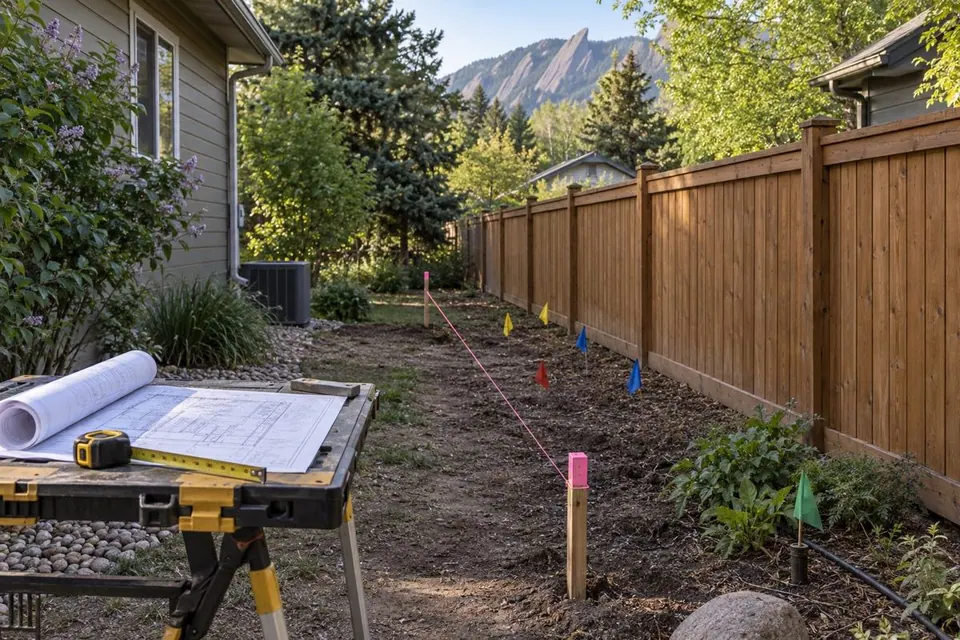
- Known easements, drainage paths, utility equipment, and private underground systems.
- Photos of the yard in different seasons or before landscaping obscured an area.
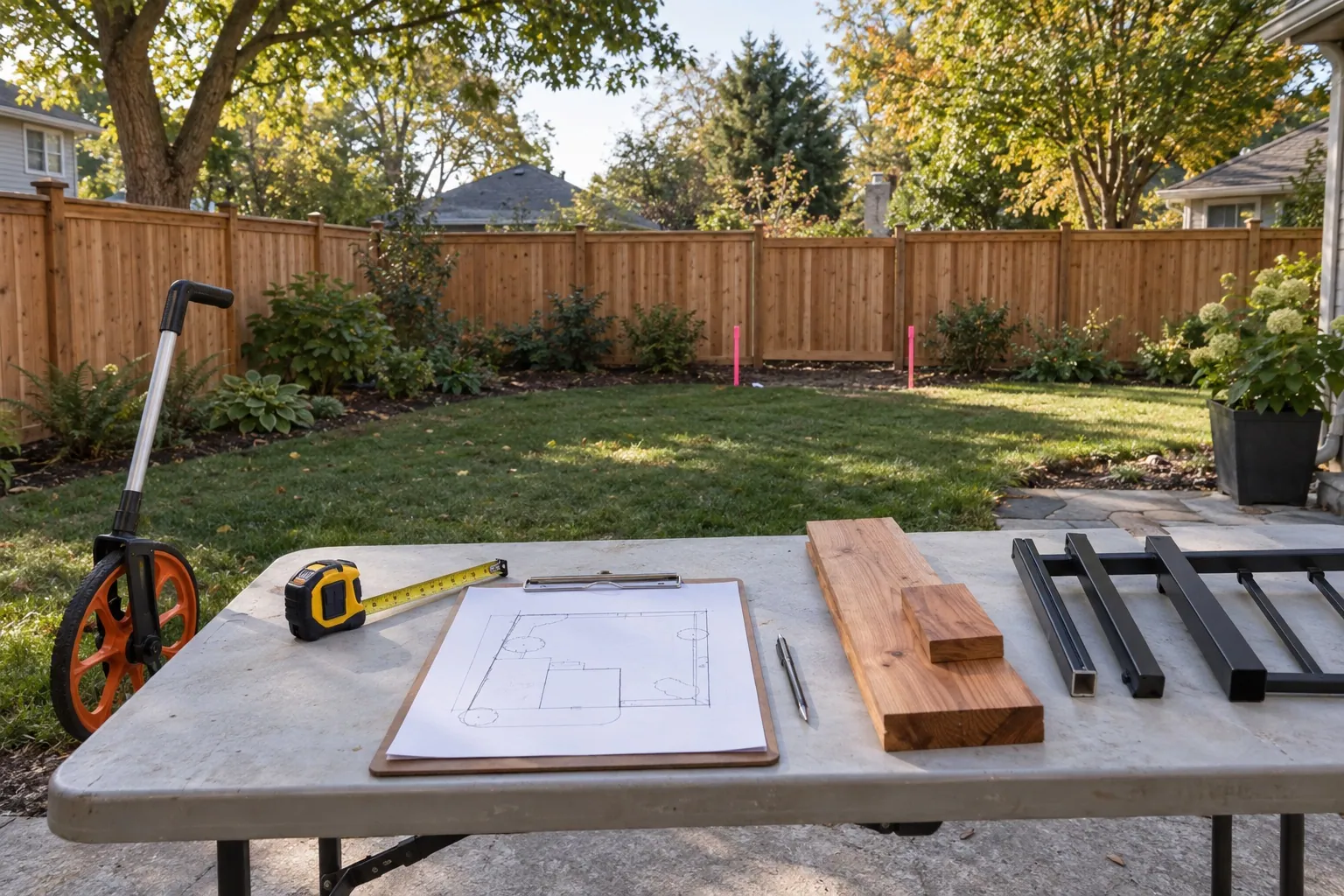
- A rough sketch showing desired fence lines and gate locations.
Walk the routes, not just the perimeter
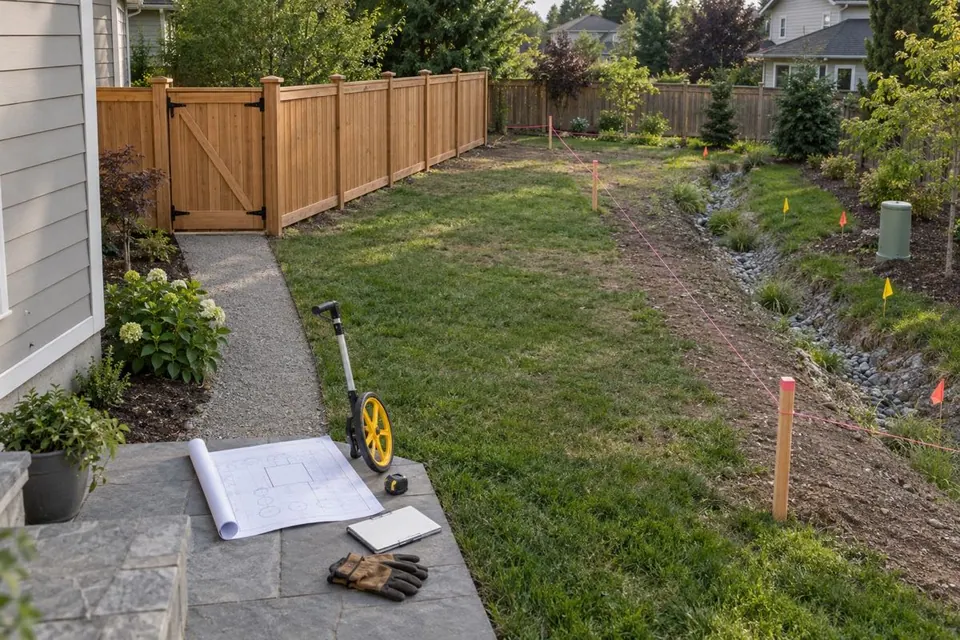
Trace how people, pets, bins, bikes, lawn equipment, and deliveries move through the property. Measure the widest equipment that must pass through a gate and think about future landscaping or construction access. Point out door swings, steps, downspouts, windows, condensers, hose bibs, and other conditions that could conflict with a gate or post.
Identify site conditions that affect the work
- Slope, retaining walls, and abrupt grade changes.
- Narrow side-yard access or stairs between the street and work area.
- Mature trees, roots, hedges, irrigation, and planting beds.
- Rocky soil, drainage swales, low areas, or evidence of frost movement.
- Existing fence ownership, removal, disposal, and temporary containment needs.
Ask questions that produce a complete proposal
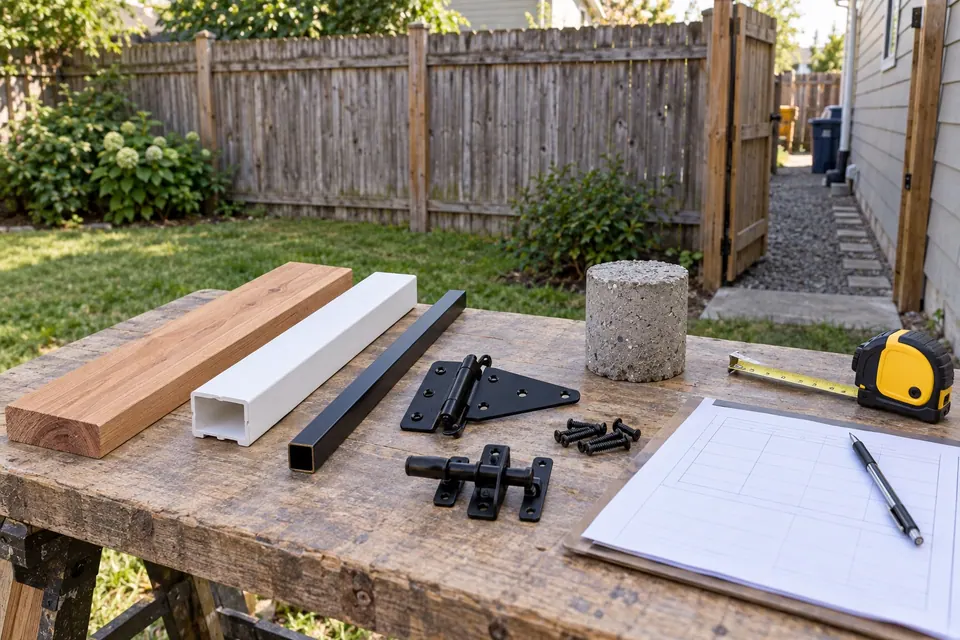
Ask the contractor to identify the material system, height, construction details, gate hardware, transitions, removals, cleanup, exclusions, schedule assumptions, payment structure, and written workmanship coverage. If a recommendation changes because of site conditions, ask why. The explanation is often more valuable than a list of options.
For product comparisons, use the Colorado fence materials guide. For proposal comparisons, read what actually changes fence project cost.
What to expect before work begins
Before installation, confirm the final line, gate locations and swing, product selections, owner responsibilities, utility locate status, access plan, and how pets or children will be managed while the yard is open. Changes are easiest and least expensive while they are still marks on a plan.
Your one-page estimate checklist
When those items are ready, request a Blue Squirrel estimate and bring this checklist to the site visit.
- Top three goals for the finished fence.
- Boundary and approval documents available.
- Gate routes and required clear widths identified.
- Private underground systems disclosed.
- Removal, access, slope, drainage, and landscaping discussed.
- Exact materials and hardware described in writing.
- Cleanup, exclusions, warranty terms, and final walkthrough included.