Best fit
Acreage boundaries, paddocks, equipment areas, rural residences, and properties where long runs and dependable access matter.
Read the guide Request an Estimate
Farm and ranch fencing
Blue Squirrel plans agricultural and large-property fencing across the northern Front Range around livestock pressure, terrain, equipment, gates, visibility, and maintenance. The system is matched to the job rather than selected from appearance alone.
Request a free estimate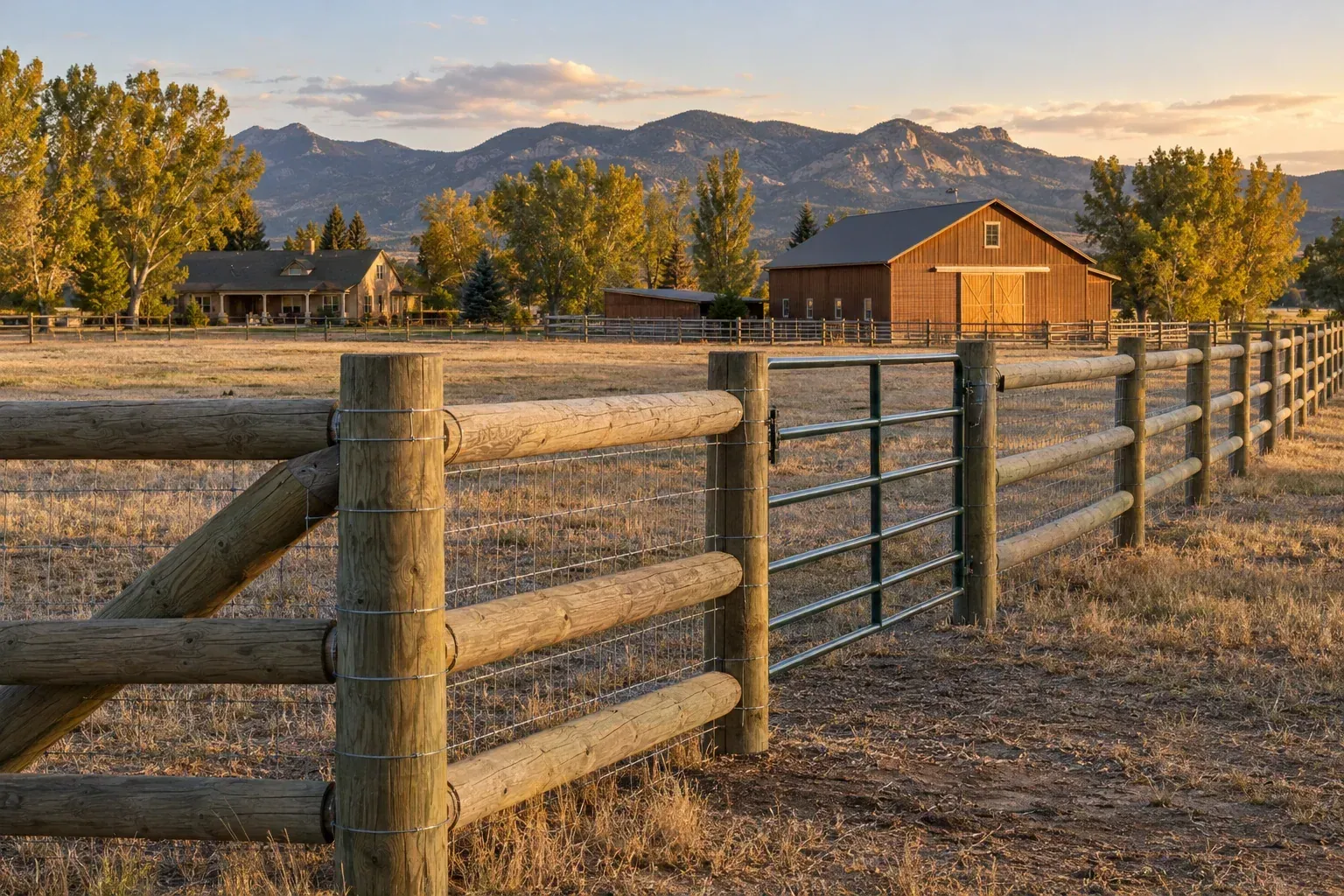
Acreage boundaries, paddocks, equipment areas, rural residences, and properties where long runs and dependable access matter.
Read the guideAnimal type, pressure, visibility, terrain, wildlife movement, snow, wind, and maintenance change the right wire, rail, post, and spacing choices.
Read the guideTotal footage, corners, braces, gates, clearing, rock, access, grade, removals, and material specification drive the project.
Read the guideOur process
We review boundaries, animals, traffic, equipment, gates, terrain, and maintenance priorities, then define the fence types and transitions by area.
We review the fence line, grade, access, gates, drainage, privacy, pets, and the way the property is used.
We confirm materials, heights, posts, gates, removals, finish details, responsibilities, and pricing in writing.
The crew lays out the work, installs the system, checks alignment and hardware, and keeps the work area organized.
We test gates, review the completed fence, explain care and warranty information, and document any final adjustments.
The answer depends on animal type, pressure, temperament, visibility, terrain, and management practices. Rail, woven wire, no-climb mesh, high-tensile systems, and combinations solve different containment needs.
Yes. A property may need a more finished fence near the home, agricultural fencing along long boundaries, and stronger gates or corrals at high-use locations. Transitions should be planned intentionally.
Long footage, clearing, rock, slopes, corners, braces, gates, equipment access, material specification, and distance across the property all affect labor and cost.
Location, wire spacing, total height, bottom clearance, and seasonal movement can matter. The right approach depends on the animals being contained and wildlife known to cross the property.
Gate width, equipment turning radius, livestock flow, snow, grade, drainage, frequency of use, and future access needs should be resolved before posts and braces are installed.
Tell us the acreage, animals or uses, terrain, approximate footage, gate needs, and project location.