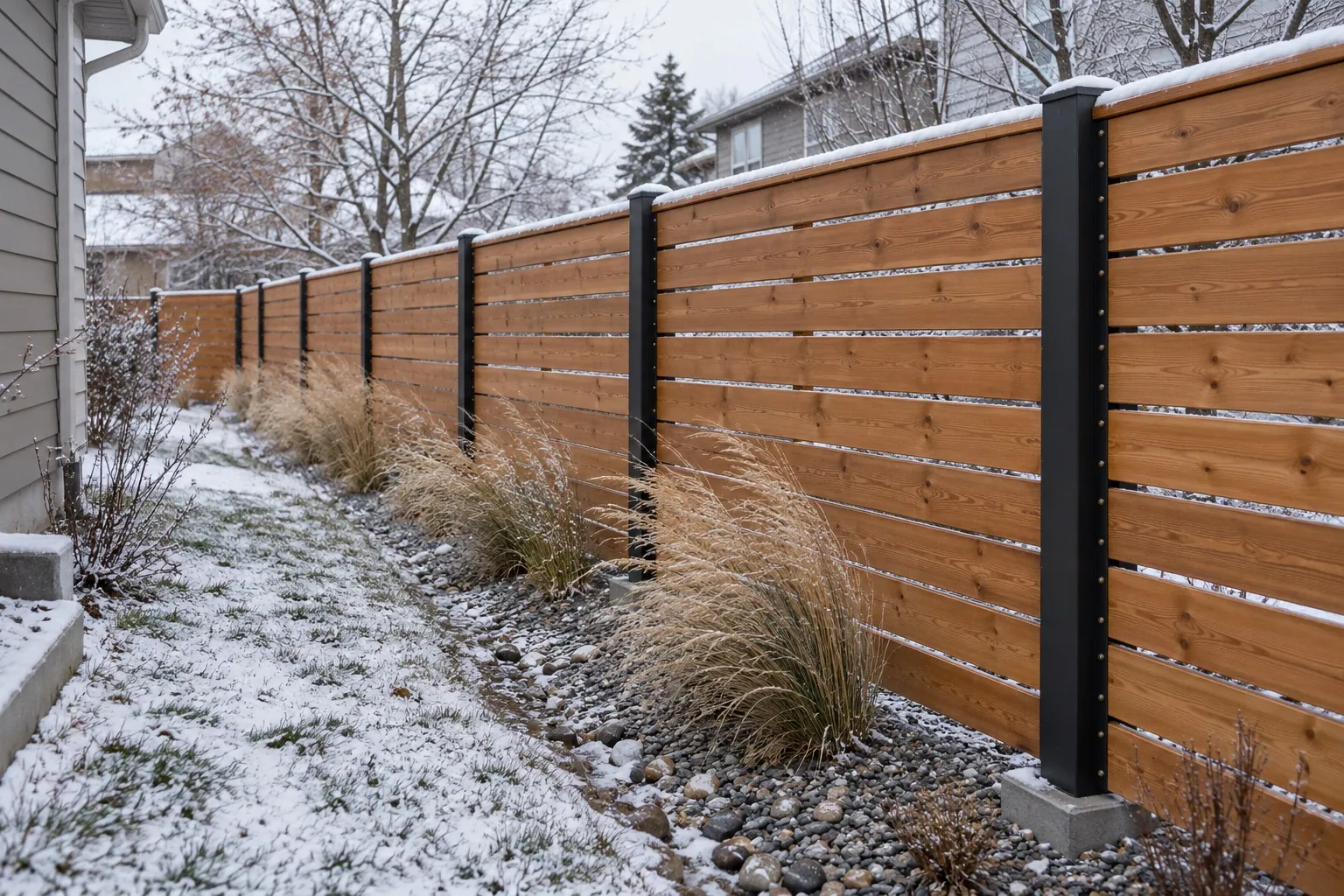
Durability is a system, not a material slogan
A fence lasts because the material, posts, connections, gates, footing approach, grade, drainage, finish, and maintenance fit the site. No material is universally immune to weather, movement, impact, or neglect. Ask how the proposed assembly addresses the property’s actual exposure.
Wind: look beyond solid versus open
A solid fence presents more surface area to wind, but post spacing, height, footing, soil, topography, adjacent buildings, panel connection, and gate design all matter. Wind can funnel between houses or accelerate across an exposed lot. Large gates create additional leverage and should not be treated as ordinary panels.
Open designs such as aluminum fencing or chain-link fencing may reduce wind area when privacy is not required. Where privacy matters, targeted solid sections may be more appropriate than a continuous wall.
Snow and freeze-thaw cycles
Drifting snow can hold moisture against lower components and obstruct gate movement. Freeze-thaw cycles reveal poor drainage, unstable soil, and inadequate clearance. Do not pile plowed snow against a fence or force a frozen gate. Note recurring drift patterns during planning and preserve room for seasonal operation.
Sun and finish exposure
Front Range sun can change wood color, challenge coatings, and make different exposures age at different rates. Follow the specific manufacturer or finish supplier’s care instructions. Keep records of colors and products used so repairs and touch-ups can be matched as closely as possible.
Drainage and irrigation are hidden durability issues
A low spot, downspout discharge, overspray, buried drip line, or blocked swale can keep posts and lower fence components wetter than intended. Observe the property during irrigation and after a storm. A fence should not dam runoff, redirect water toward structures, or conceal a drainage problem.
When grade is complex, read our guide to fence design on sloped lots before choosing a bottom detail.
Gates need a maintenance plan
Gates combine weight, movement, leverage, and hardware. Check that hinges remain secure, latches align, stops work, and the leaf clears the ground. Changes can signal settlement, post movement, loose hardware, impact, or seasonal grade conditions. Early adjustment is usually easier than waiting for repeated slamming or dragging to damage the assembly.
A simple inspection rhythm
- After major wind: check leaning, loose panels, caps, fasteners, and gate alignment.
- After snowmelt or heavy rain: inspect low areas, erosion, ponding, and drainage paths.
- Seasonally: trim vegetation and correct irrigation contact.
- For coated metal: address chips or exposed areas using the documented repair method.
- For wood: follow the specified cleaning and finish schedule.
- After landscaping or construction: recheck grade, access, impact, and buried systems.
Repair the cause, not only the symptom
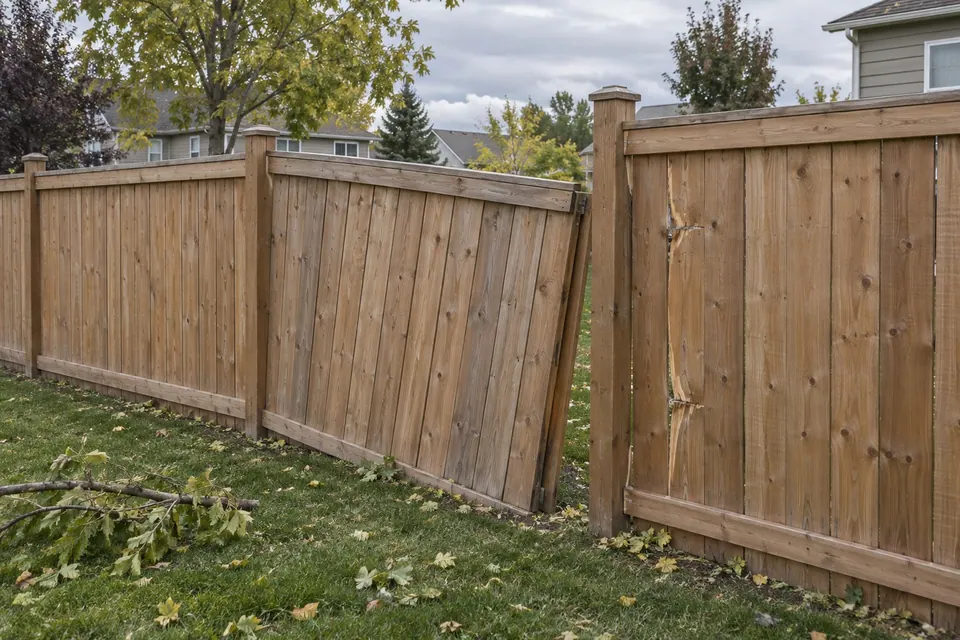
A leaning section may reflect post movement, drainage, impact, or a failed connection. A gate that will not latch may reflect a hinge problem, post movement, or grade interference. Diagnose the cause before replacing isolated parts. Blue Squirrel’s fence repair service can evaluate the visible condition and define an appropriate scope.
For a broader approach to regional design, return to the Front Range fence design guide.