A leaning section, a few broken boards, or a gate that will not latch does not automatically mean a fence needs to come out. It does not automatically mean a quick fix will last, either. The right answer depends on what failed, why it failed, and how much of the fence is still sound. This guide walks through the checks that usually settle the question.
Start with the posts
Posts carry the whole fence, so they decide most repair-or-replace calls. Push gently on several posts along the line. A post that rocks, leans, or shows soft wood or heavy corrosion at the ground line is a structural problem, not a cosmetic one. One or two failing posts can usually be replaced on their own. When failures are spread across much of the run, replacing posts one at a time often costs more over a few years than replacing the fence once.
Look at the ground around the posts too. Standing water, sprinkler overspray, soil washed away from the footing, or a downspout pointed at the fence line can explain why posts failed early. If that cause is not corrected, new posts will face the same conditions.
Signs a repair is likely worth it
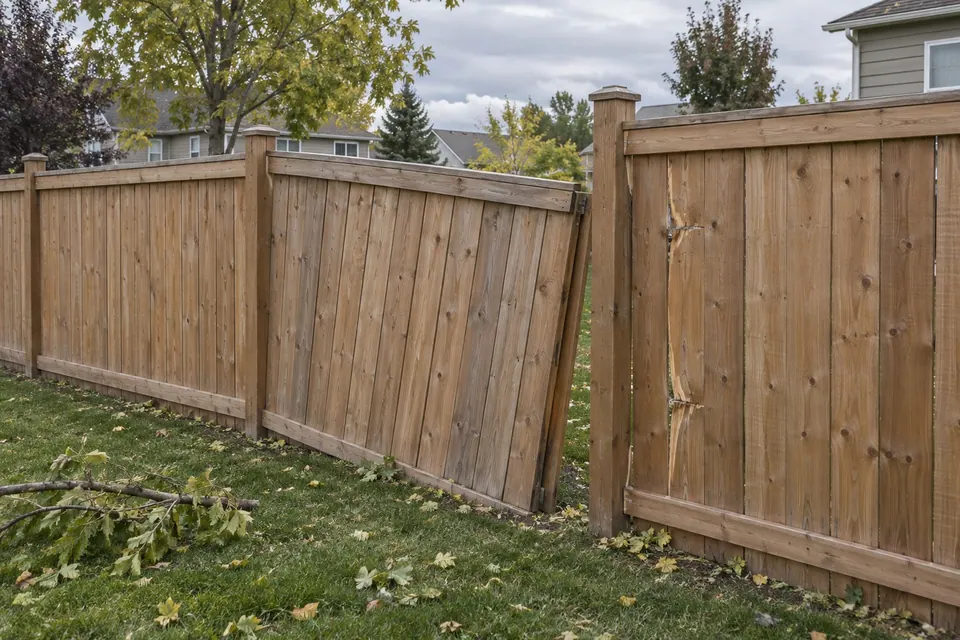
- Damage is limited to one area, such as a section hit by a vehicle, a fallen branch, or a single wind event.
- Most posts are straight and solid, and the problem is boards, pickets, rails, or panels.
- The issue is hardware: loose hinges, a misaligned latch, missing fasteners, or a worn gate stop.
- Matching material is still available, so the repaired section will fit the rest of the fence.
- The fence still does its job for privacy, pets, pools, or security once the damaged part is fixed.
Signs replacement is the better investment
- Many posts are loose, leaning, rotted, or rusted through at grade.
- Wood is soft, split, or crumbling across long stretches rather than in one spot.
- Vinyl panels are cracked or brittle in several places, or metal shows widespread corrosion or failed welds.
- You have repaired the same fence several times in the last few years and the problems keep spreading.
- Your needs have changed: a new pool, a new dog, more privacy, or a fence that no longer meets current rules or HOA standards.
What to check by material
Wood and cedar
Press a screwdriver into the bottom of boards and posts near the ground. Firm wood that is only weathered or gray can often be cleaned, repaired, and refinished. Soft or punky wood is decay. Front Range sun dries and checks wood faster on south- and west-facing runs, so compare exposures before judging the whole fence. Our wood fencing page covers what goes into a new wood fence if replacement makes sense.
Vinyl
Vinyl does not rot, but panels can crack from impact, and rails can pull out of posts after wind or settling. Individual panels and rails can often be replaced if the same profile and color are still available. Widespread cracking or brittleness usually points toward replacing the run. See vinyl fencing for current options.
Aluminum, steel, and chain link
Check for bent sections, loose brackets, chipped coatings, and corrosion at the base of posts. Bent panels and damaged chain-link fabric can usually be replaced in sections. Corrosion that has eaten through posts or framing is harder to repair well.
Don't forget the gate
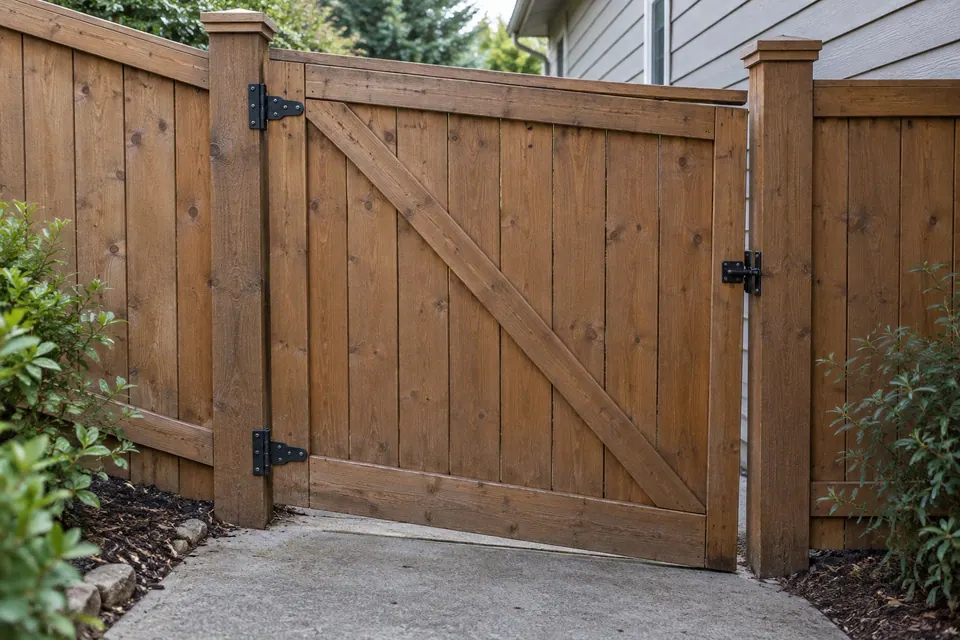
Gates take more wear than any other part of a fence. A gate that drags, sags, or will not latch is often a hinge-post or hardware problem that can be fixed without touching the rest of the fence. Read why fence gates sag and how to fix them before deciding the whole fence has to go.
Check rules before bigger work
Small repairs rarely need approval, but larger replacements can. Several Front Range cities require a permit when a replacement changes the height, location, or material, or when more than a set share of the fence is replaced. HOAs may also need to approve a replacement that changes color or style. Check with your city and HOA before work starts. Our guides to Boulder County fence permits and HOA fence approval explain what to look for.
Get an honest assessment
If you are still unsure, photograph the damage, note how old the fence is, and list anything that has changed nearby, such as new irrigation, grading, or a new pet. Blue Squirrel's fence repair team can look at the posts, panels, and gates and tell you whether a repair will hold or whether a new fence is the better use of your money. Request an estimate to get started.