A gate is the hardest-working part of any fence. It swings every day, carries its full weight on one side, and catches the wind. So it is no surprise that gates are usually the first thing to drag, sag, or stop latching. The good news is that the cause is almost always one of three things, and each has a clear fix.
Find the cause in five minutes
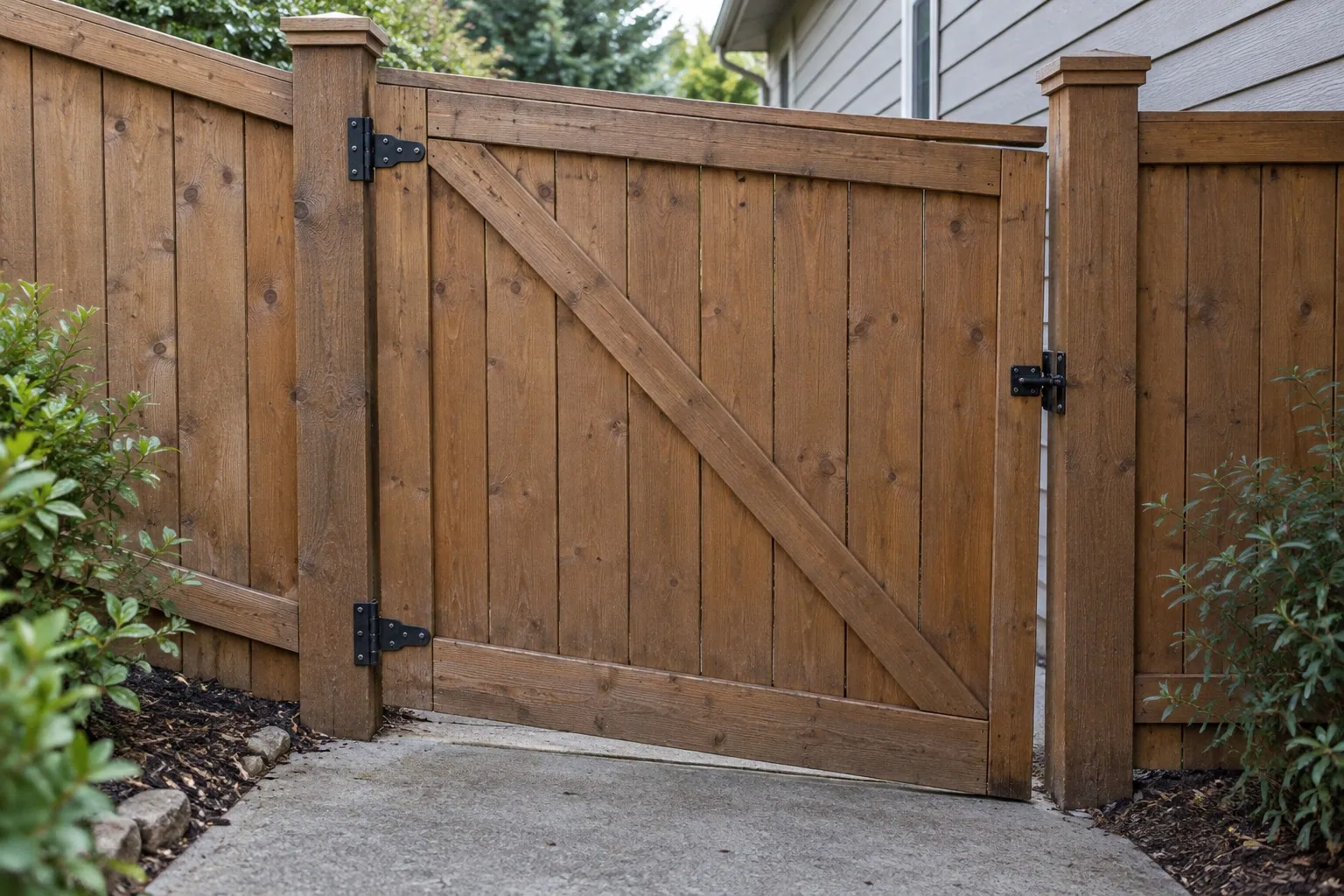
- Close the gate and look at the gap between the gate and the latch post. A gap that is wider at the top than the bottom means the gate is dropping on the latch side.
- Hold a level against the hinge post. If it leans toward the opening or moves when you push it, the post is the problem.
- Check the gate frame. Measure corner to corner both ways; if the two measurements differ, the frame has racked out of square.
- Grab the gate near the hinges and lift. Movement or clicking at the hinges points to loose screws, worn hinges, or hinges that are too light for the gate.
- Look at the ground under the swing. Heaved soil, new mulch, or a raised paver can make a gate drag even when nothing else is wrong.
Cause 1: The hinge post is moving
This is the most common cause and the one hardware cannot fix. The hinge post carries the gate's weight as leverage, so a shallow footing, wet soil, a rotted base, or a post that is too light for the gate will slowly lean. Along the Front Range, freeze-thaw cycles and clay soils that swell when wet can speed this up. The lasting fix is to reset the post with a proper footing or replace it with a heavier post sized for the gate.
Cause 2: The gate frame has racked
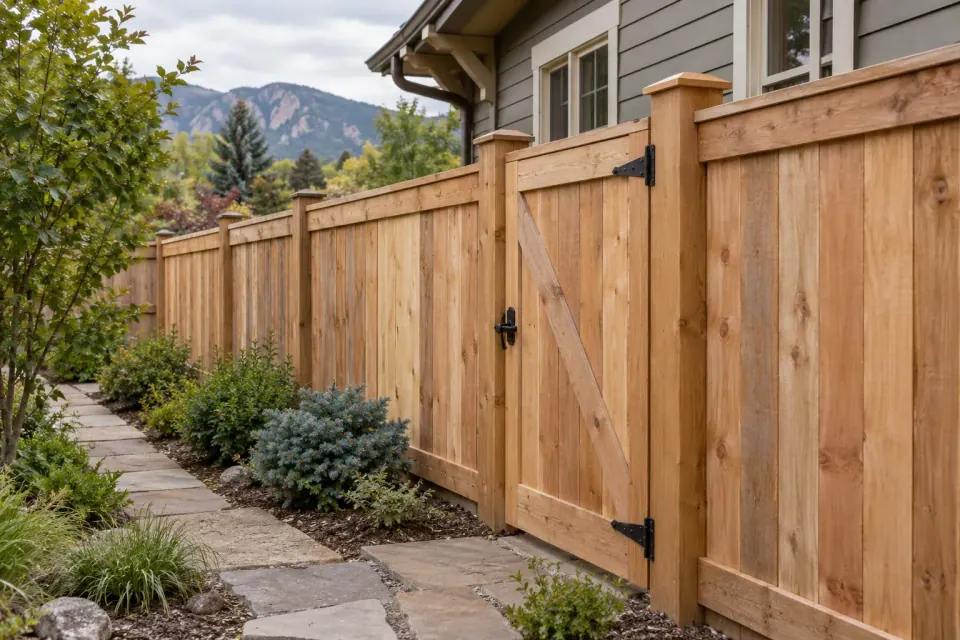
Wood gates without a diagonal brace, or with the brace running the wrong way, slowly pull out of square. The brace should run from the bottom hinge corner up to the top latch corner so it pushes the latch side up. On wood gates, adding or correcting the brace, or installing a steel anti-sag cable and turnbuckle kit, can pull the frame back into square. Metal and vinyl gates with bent or broken frames usually need the frame repaired or the gate replaced.
Cause 3: Hinges and hardware
Screws strip out of wood over time, hinges wear, and light-duty hinges bend under heavy gates. Replacing hardware with hinges rated for the gate's size and weight, and fastening them with through-bolts where possible, often solves the problem when the post and frame are sound. Adjustable hinges and latches make future tune-ups easier. Also check gate stops: a gate that swings past its closed position strains the hinges with every slam.
Tips by gate type
- Wood gates: watch the brace direction and the condition of the wood around screws. A steel-framed wood gate resists sagging far better on wide openings.
- Vinyl gates: sagging often means the hinge post lacks an internal reinforcement. A reinforced post or a metal-framed gate usually fixes it.
- Aluminum gates: check hinge adjustment first, then the post. Self-closing pool gates need their closer and latch kept in adjustment so they close and latch every time.
- Chain-link gates: loose hinge clamps and bent frames are common. Re-tighten the clamps and confirm the gate post is heavier than a standard line post.
Wide and double driveway gates
Double gates and wide driveway gates put much more leverage on their posts. They need heavier posts, deeper footings, rigid framing, a center drop rod with a ground receiver, and stops that hold each leaf in place. When a wide gate sags, the posts are usually undersized for the span. See our gate systems page for driveway and automated options, and our guide to gates on sloped lots if your gate swings uphill.
When to call a pro
Hardware tightening and an anti-sag kit are reasonable weekend projects. Resetting a hinge post, rebuilding a frame, or fixing a pool gate that must self-close and latch are better left to a professional. Blue Squirrel's fence repair crew handles gate repairs, and our residential gates team can build a replacement that is framed and hung to stay square. Request an estimate with a photo of the gate closed.