Choose by property and priorities, not popularity
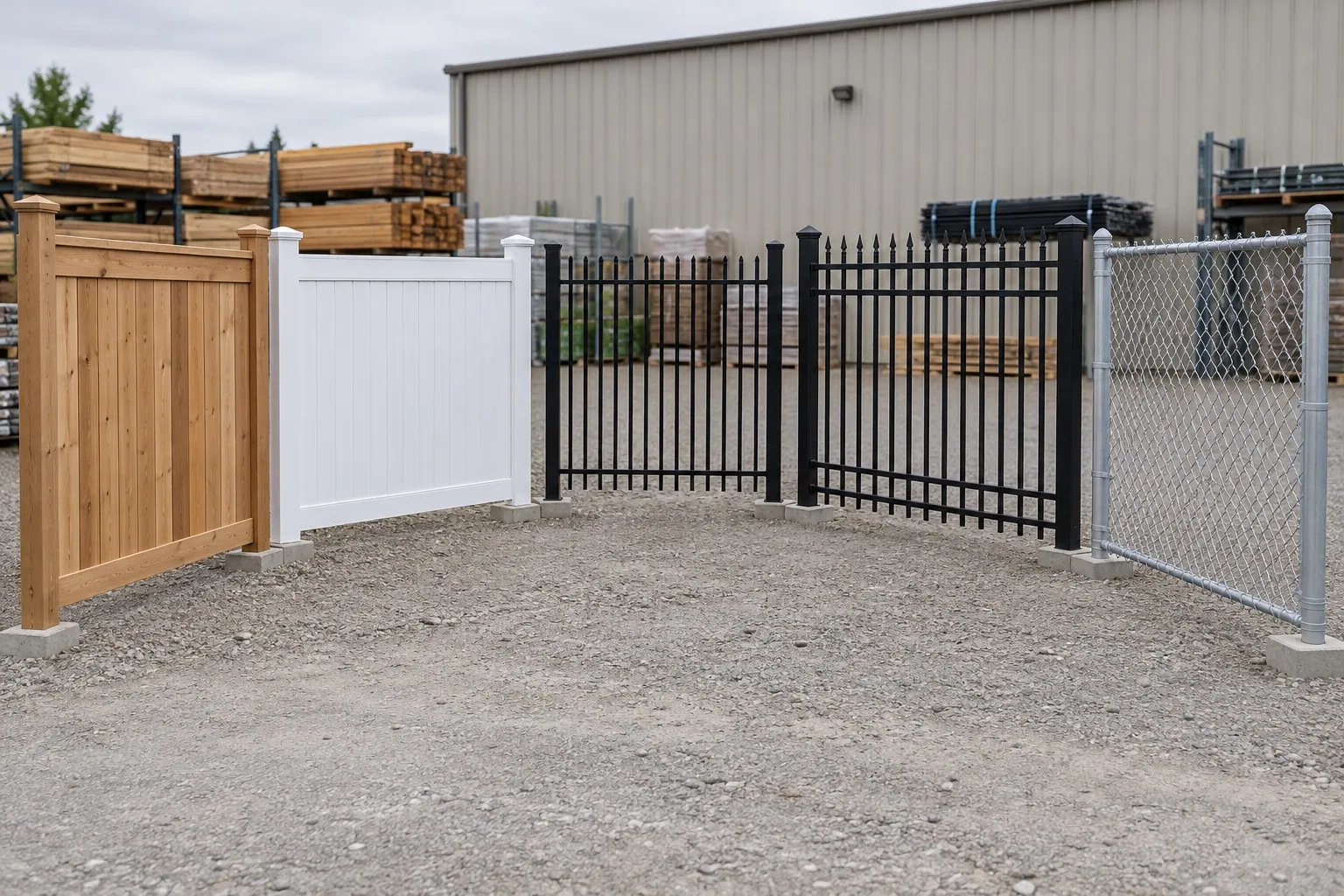
The right fence material is the one that solves the property’s actual problems while fitting the architecture, care expectations, terrain, and budget. Start by ranking privacy, preserved views, pet or pool needs, gate use, appearance, maintenance, and repairability. A material that excels at one may be a poor fit for another.
This guide is the hub for our material library. Continue with cedar versus vinyl, aluminum versus steel, and fence and gate design on sloped lots for focused comparisons.
Wood fencing: adaptable, warm, and detail-dependent
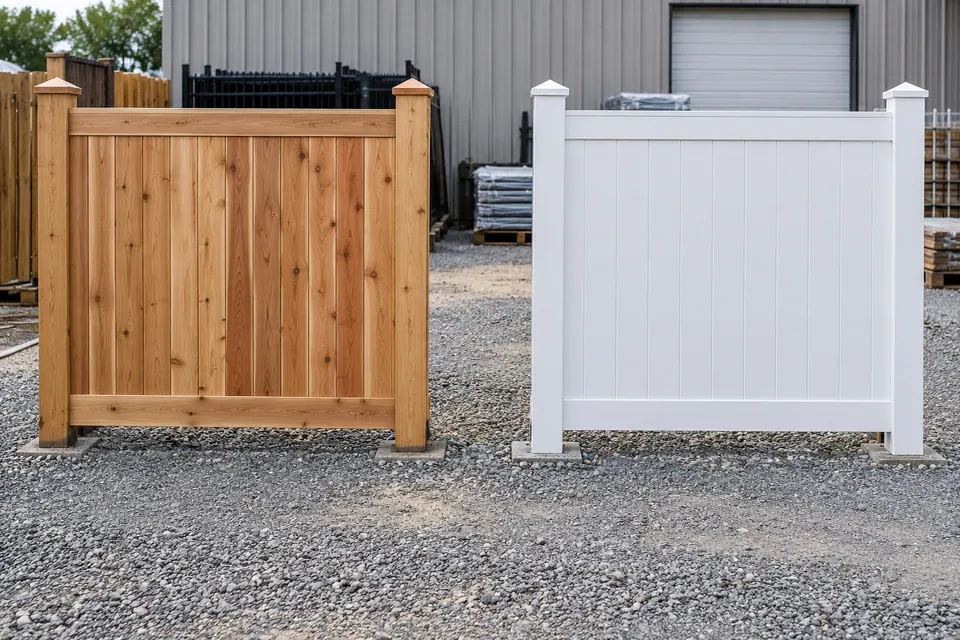
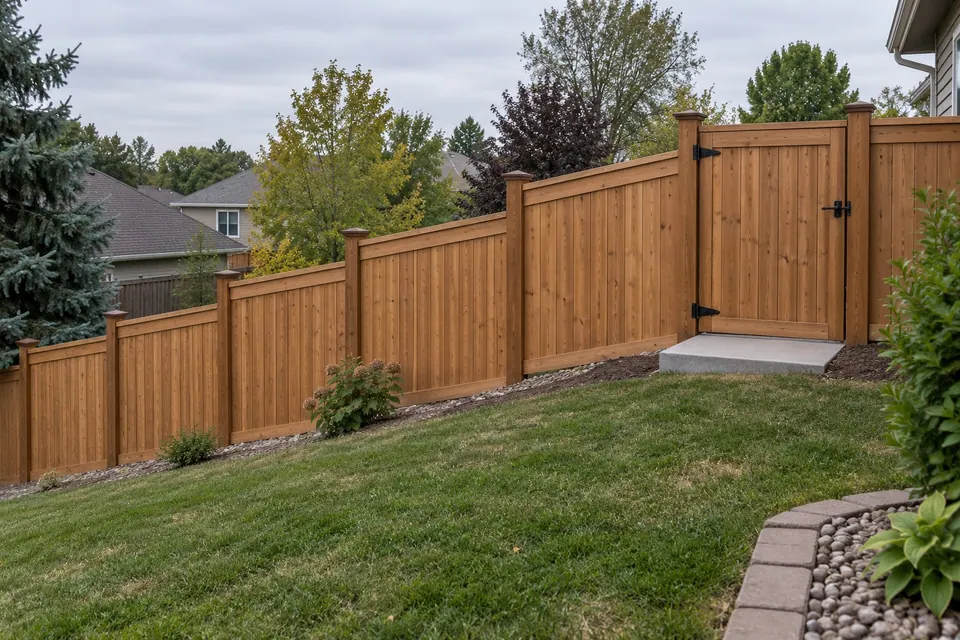
Wood can move comfortably between traditional, rustic, and modern homes. Board orientation, spacing, cap details, trim, stain, and gate design give it enormous visual range. It can also follow irregular sites in ways that feel natural. The tradeoff is ongoing exposure: wood changes with sun, moisture, soil contact, and maintenance practices.
Ask about species and grade, board thickness, post and rail dimensions, fasteners, ground clearance, finish expectations, and how damaged components can be repaired. Explore our wood fencing options and compare them with vinyl in the detailed guide.
Vinyl fencing: consistent privacy with a defined system
Vinyl is often considered for clean privacy, consistent color, and lower routine finish maintenance. Product quality and construction vary, so review the manufacturer, panel profile, internal reinforcement where used, post system, gate frame, approved cleaning methods, and written coverage. White is common, but profile and color choices depend on the manufacturer.
Vinyl systems have specific methods for slopes and transitions. Confirm how the selected product will meet the ground and how a gate will be supported. See our vinyl fencing page for available applications.
Aluminum fencing: open views and a refined edge
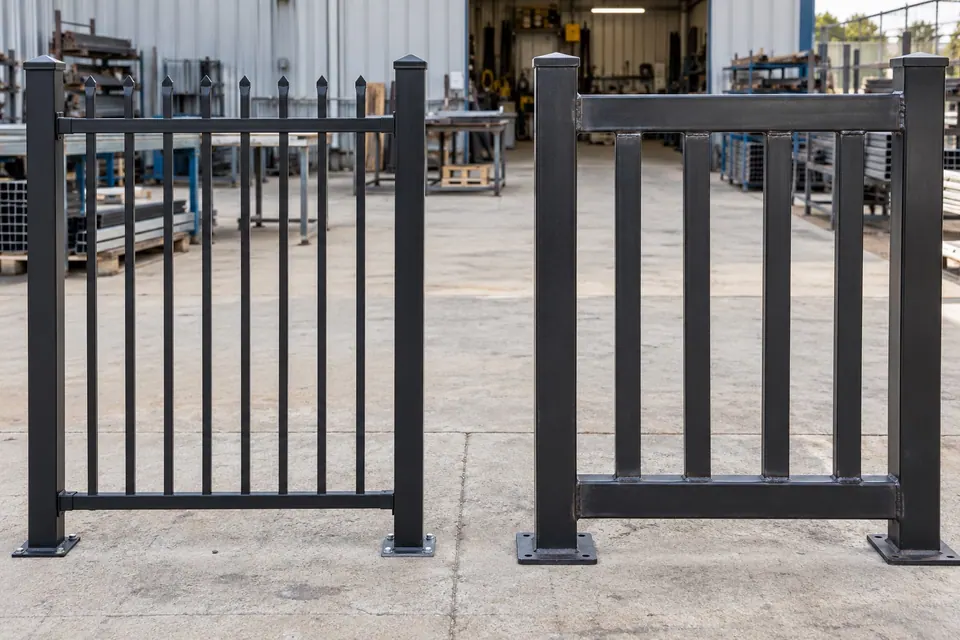
Aluminum is commonly used where a property needs a defined boundary without a visual wall. It can suit pools, gardens, front yards, and view-sensitive landscapes. It is lighter than steel and generally valued for a factory-applied finish and lower corrosion concerns, but the exact system and application still matter.
Compare picket spacing, rail and post dimensions, grade accommodation, gate frame, latch, finish, and any application-specific product documentation. For pool use, the final design must follow the currently adopted rules for the jurisdiction and the actual site.
Steel fencing: presence, strength, and finish care
Steel can create a substantial architectural presence and is often chosen for custom or high-use gates, ornamental work, and applications where stiffness matters. It is heavier and may support fabrication details that differ from modular aluminum systems. Steel also requires a well-specified coating and an owner who understands how finish damage will be maintained.
Do not reduce the choice to “steel is stronger.” Ask which metal, wall thickness or profile, weld and fabrication method, galvanizing or coating system, hardware, and repair process are proposed. Our aluminum versus steel guide walks through the decision.
Chain-link fencing: practical visibility and adaptable containment
Chain link remains useful for practical containment, larger runs, utility areas, commercial boundaries, and budgets that prioritize function. Mesh gauge, opening size, coating, framework, tension components, bottom treatment, and gate construction define the system. Vinyl-coated options can soften the appearance, while slats add screening with additional wind considerations.
Review chain-link fencing when visibility, durability, or a long functional boundary matters more than a solid architectural screen.
Composite and mixed-material designs
Composite boards and mixed systems can be useful when the project needs a particular finish, privacy level, or architectural expression. They should be evaluated as specific products rather than as a single category. Review expansion, span limits, framing, fasteners, gate compatibility, cleaning, replacement availability, and manufacturer requirements.
Mixing materials can also improve a plan: solid privacy near a patio, open metal along a view, and a carefully detailed gate at the entry. Transitions need to be designed so the system feels intentional instead of patched together.
A decision framework that works
Once you have narrowed the material, return to the complete fence planning guide to connect the product choice to the property, approvals, and written scope.
- Privacy: full screening, filtered screening, or open boundary.
- Architecture: relationship to the home, landscape, and neighboring context.
- Terrain: racking, stepping, ground gaps, retaining walls, and drainage.
- Gates: frequency of use, width, weight, hardware, and access needs.
- Maintenance: cleaning, finish renewal, corrosion care, and replaceable parts.
- Documentation: exact manufacturer or construction specification and written coverage.
- Budget: initial scope plus realistic long-term care and repair expectations.