The short answer
Choose cedar when natural texture, custom detailing, repairable individual components, and a site-responsive look are primary. Choose vinyl when consistent privacy, a manufactured system, and avoiding routine stain or paint renewal are primary. Neither choice is automatically better; the quality of the specification and installation matters in both.
Appearance and architectural fit
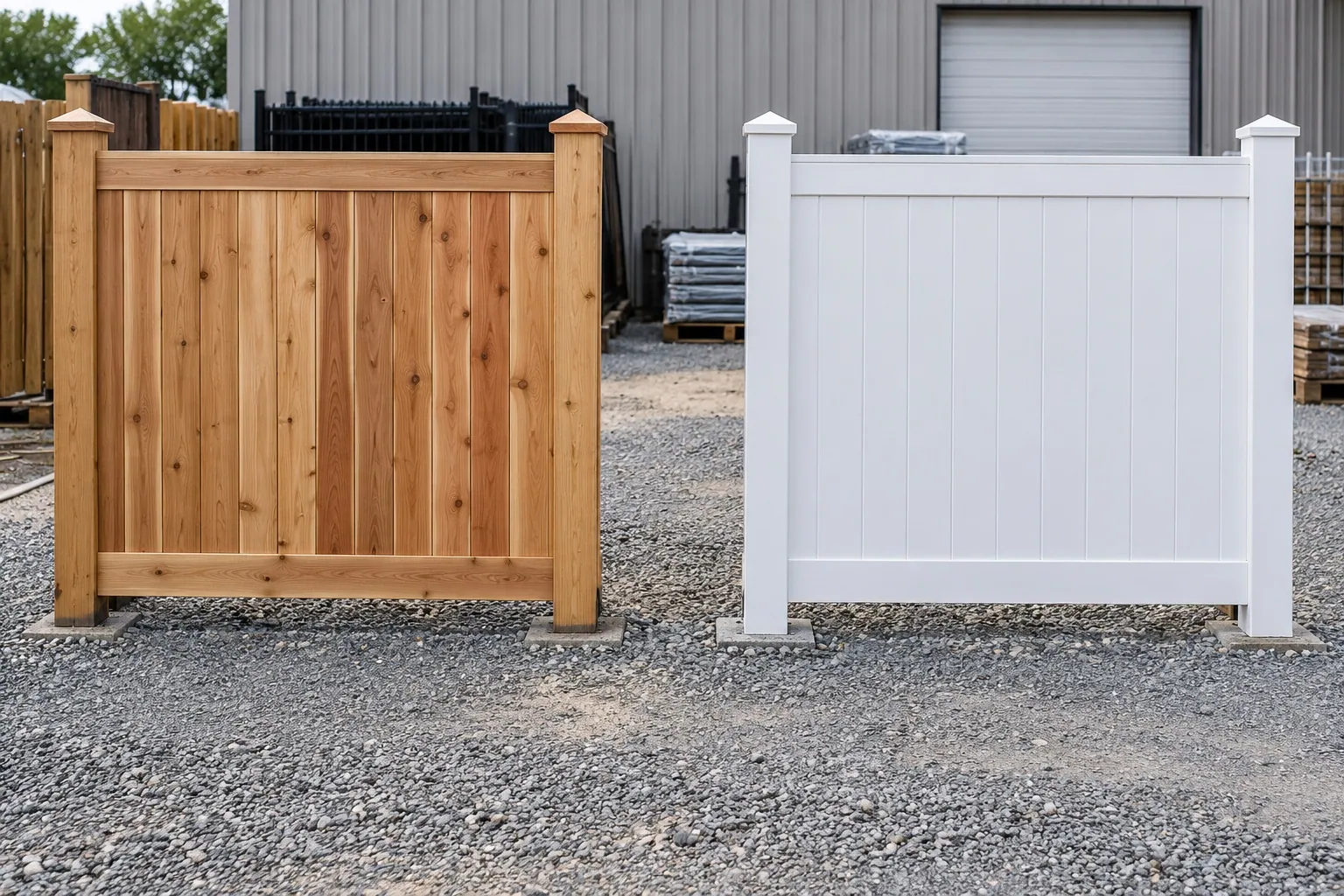
Cedar has real grain, knots, and color variation. It can be built in vertical, horizontal, spaced, shadow-box, framed, capped, and mixed-height compositions. That flexibility works especially well when the fence needs to respond to an older landscape or become part of a modern outdoor room.
Vinyl has a cleaner, more uniform appearance. Profiles and colors are manufacturer-specific, and the system tends to read as crisp and consistent. Ask to see the actual product rather than choosing from the word “vinyl” alone.
Maintenance and aging
Wood is an exterior natural material. Sun and moisture change its color and surface over time, and finishes require renewal according to the product and exposure. Boards can sometimes be replaced individually, but matching aged wood takes care.
Vinyl does not require stain, but it still needs cleaning and inspection. Impact damage, movement, discoloration, or unavailable replacement profiles can affect repairs. Follow the manufacturer’s care instructions and avoid one-size-fits-all cleaning advice.
Wind, posts, and solid privacy panels
Any solid privacy fence presents wind area. Post size, depth, spacing, footing approach, panel construction, exposure, and local conditions all matter. Material marketing cannot compensate for a poorly designed or poorly installed support system. Discuss the specific system and site rather than assuming one material is universally “better in wind.”
Slope and ground transitions
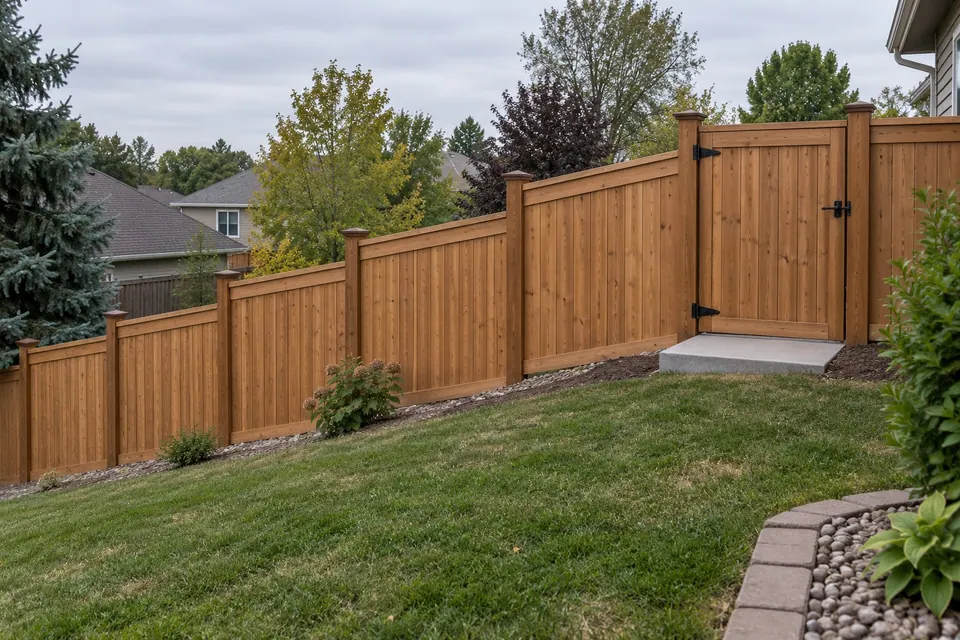
Wood can often be cut and built to follow irregular grade with custom transitions. Vinyl uses manufacturer-defined panels and methods that may rack, step, or require specific profiles. Ask to see how the bottom line, top line, and resulting gaps will look before work begins—especially when pet containment matters.
Our guide to fence design on sloped lots explains the visual and functional tradeoffs.
Gates and repairability
Wood gates can be fabricated to match the fence, but frame design, bracing, posts, and hardware are essential to long-term alignment. Vinyl gates generally rely on a reinforced manufactured frame and compatible hardware. In both cases, gate width and daily use should be defined before the system is selected.
Questions to ask before choosing
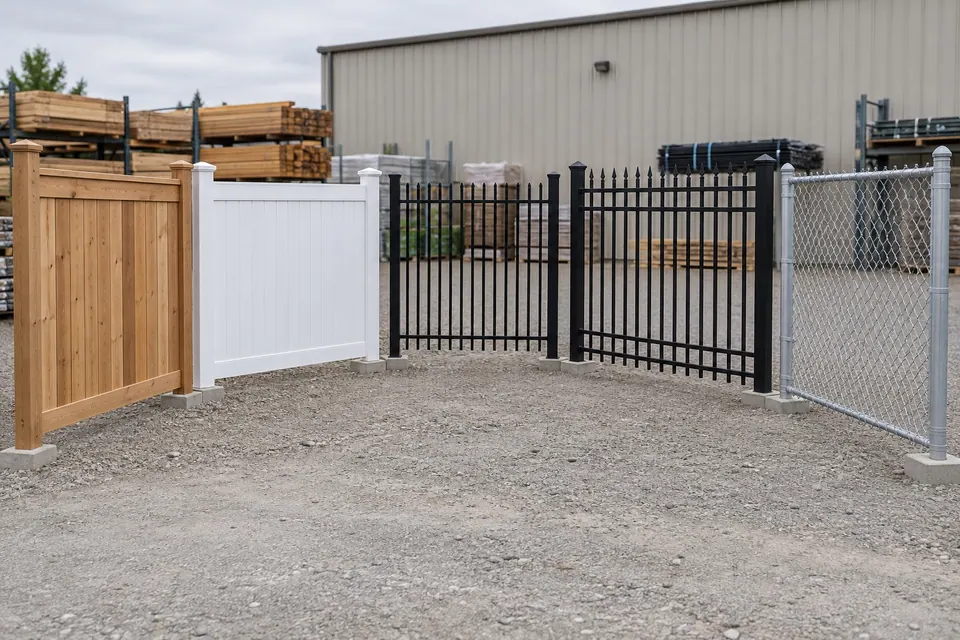
Compare our wood fencing and vinyl fencing pages, then use the full Colorado materials guide if you are still considering an open metal option.
- What exact species, grade, profile, or manufacturer is included?
- How are posts, rails, fasteners, and gate frames specified?
- How will the system follow the property’s grade?
- What cleaning or finish schedule is recommended?
- How are damaged components replaced, and are profiles readily available?
- What product and workmanship documents will be provided?