Begin with the application
An open metal fence can define a front yard, preserve a mountain or landscape view, protect a pool, edge a garden, or create a more formal entry. The best metal system depends on which of those jobs matters, how much custom detailing is desired, and how the owner wants to manage finish care over time.
Where aluminum is often a strong fit
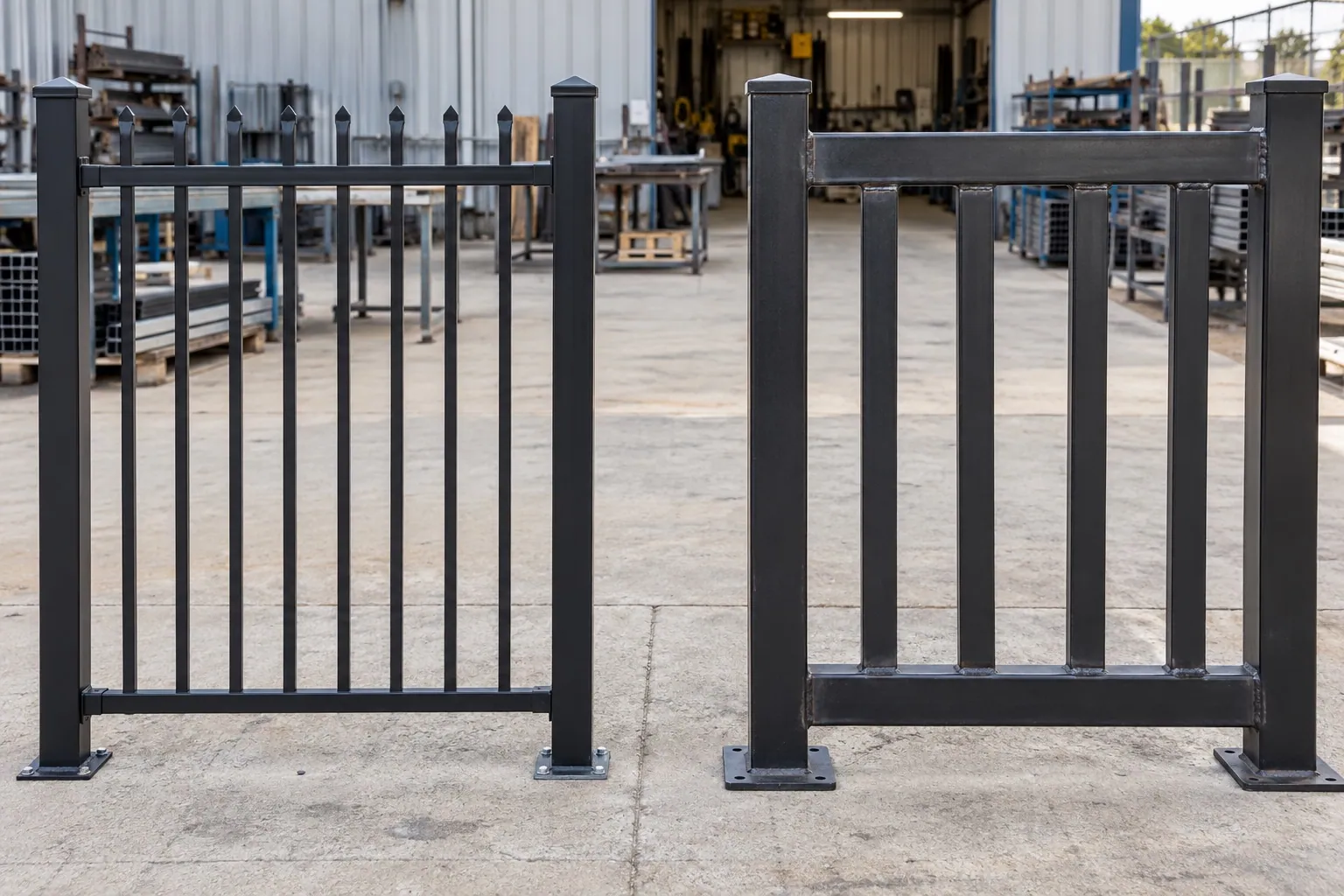
Aluminum systems are generally lighter and naturally resistant to rust. Factory-finished modular products can create a consistent ornamental look with relatively low finish maintenance. They are often considered for residential boundaries, gardens, and pool applications where open visibility is desired.
Review the actual aluminum fencing system: picket spacing, rail and post profile, panel connection, ability to follow grade, gate frame, coating, replacement parts, and written manufacturer requirements.
Where steel earns consideration
Steel provides stiffness and can support substantial custom fabrication, distinctive posts, welded frames, and high-use gates. It may be the preferred design language for a strong architectural entry or bespoke ornamental work. Its corrosion strategy must be intentional: base preparation, galvanizing where specified, coating system, drainage details, and touch-up procedures all matter.
Strength is more than the name of the metal
Alloy, wall thickness, profile, spacing, panel connection, post size, footing, weld quality, and gate geometry determine how a system behaves. A robust aluminum product may outperform a lightly specified steel product in a particular use, and the reverse can also be true. Compare engineered or manufacturer-supported systems and written details, not slogans.
Pools require a compliance-first design
A pool barrier is a safety system. Height, openings, climbability, gate swing, self-closing and self-latching operation, latch location, adjacent objects, and the relationship to the house can be regulated. Requirements vary by jurisdiction and project. Confirm current rules with the authority having jurisdiction and coordinate the complete enclosure—not only the fence panel.
See our pet and pool fence planning guide and pool fencing page for a planning framework, not a substitute for code review.
Gates expose the quality of the system
Gate weight, width, post stiffness, hinges, latch, frame construction, stops, and use frequency should be considered together. Aluminum can reduce leaf weight; steel can create a very stiff custom frame. Either can perform poorly if the posts and hardware are underspecified.
Modular systems versus custom fabrication
Many residential aluminum products are modular systems with coordinated panels, posts, brackets, gates, and finishes. That consistency can simplify specification and future part replacement, but it also means custom dimensions and unusual details must stay within the manufacturer’s system. Confirm which components are standard and which are being modified.
Fabricated steel can accommodate site-specific frames, decorative patterns, unusual openings, and substantial gate assemblies. Custom work should still be documented: shop drawings or dimensions, steel profiles, weld treatment, drainage openings, coating preparation, finish color, hardware, and field touch-up. “Custom” should mean more information, not less.
Maintenance and repair questions
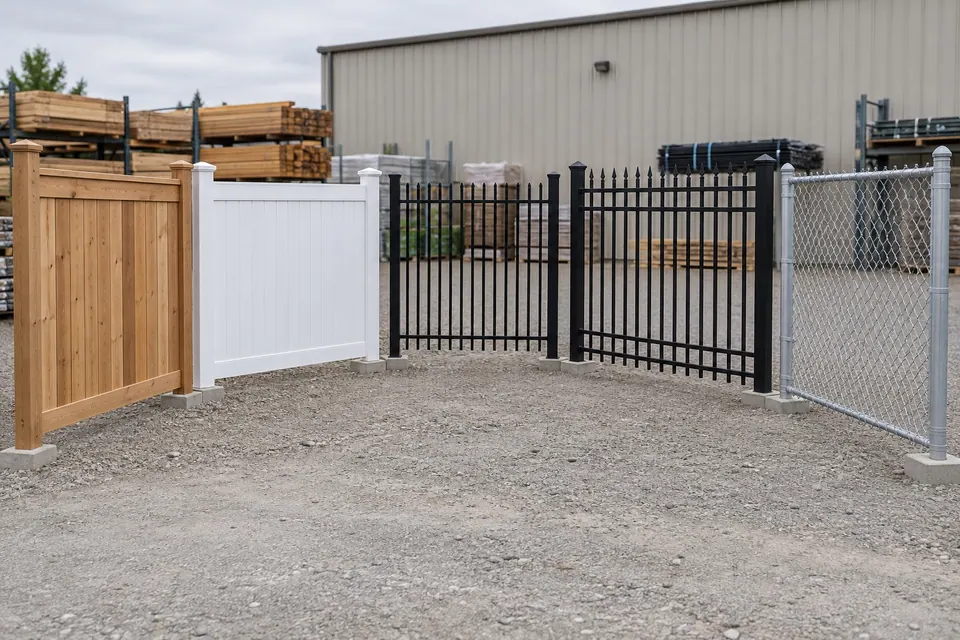
Use the complete Colorado fence materials guide to compare open metal with wood, vinyl, and chain link before finalizing the property plan.
- What coating or finish is included, and how is damage repaired?
- Are replacement panels, pickets, caps, and hardware available?
- Which components are welded, mechanically connected, or modular?
- How should fasteners and dissimilar metals be managed?
- What owner inspection and cleaning does the manufacturer recommend?