Safety and compliance
Height, openings, climbability, gate direction, self-closing hardware, latch placement, and local review requirements must be confirmed for the property.
Read the guide Request an Estimate
Pool fencing
Blue Squirrel plans pool barriers with the yard, gates, visibility, grade, and applicable local requirements in mind. We help Boulder County and Front Range property owners compare fence materials without separating appearance from safety.
Request a free estimate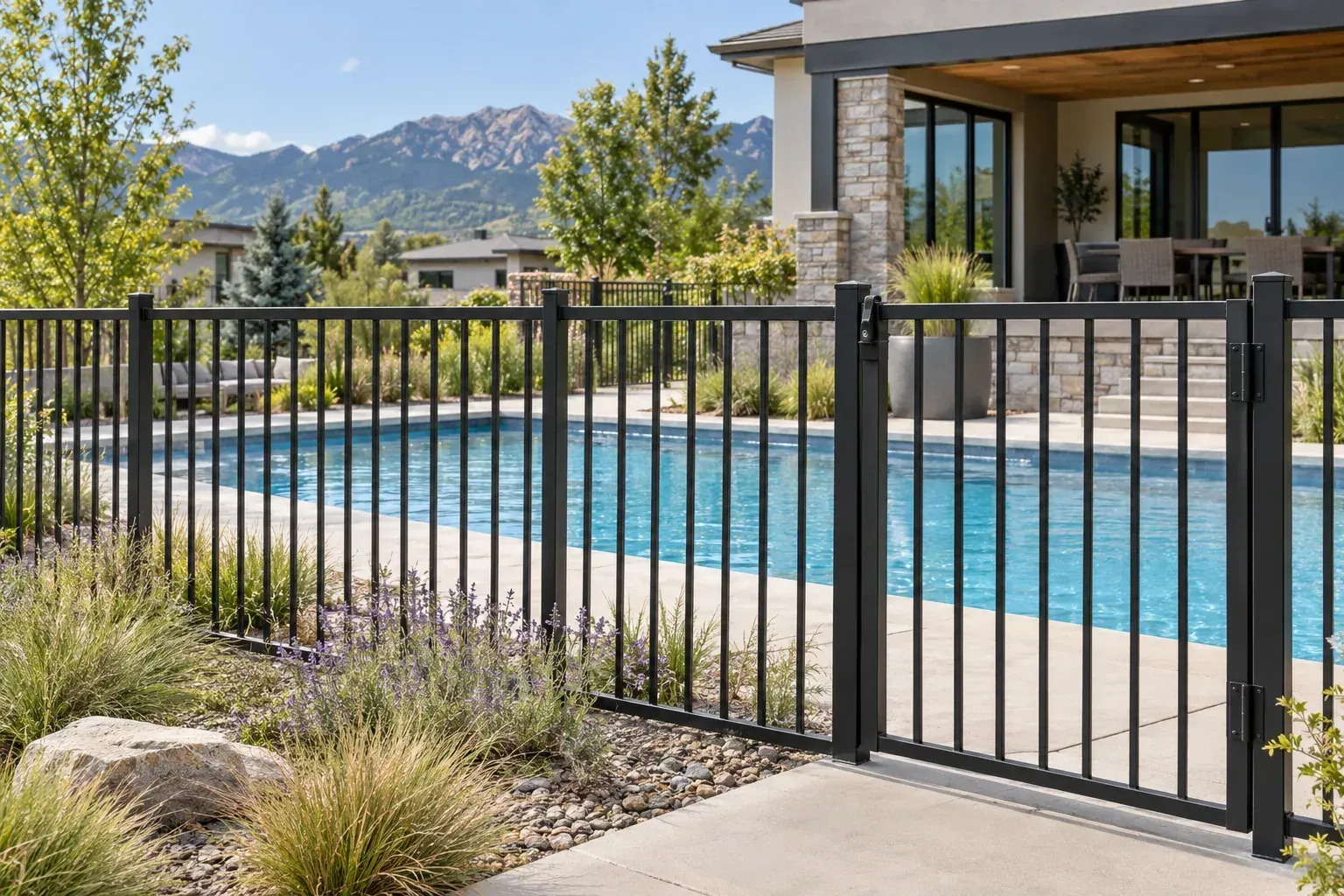
Height, openings, climbability, gate direction, self-closing hardware, latch placement, and local review requirements must be confirmed for the property.
Read the guideAluminum and other open systems preserve sightlines; solid materials add privacy. The right choice depends on supervision, landscape, wind, and architecture.
Read the guidePerimeter length, material, gates, grade, deck or landscape transitions, removals, access, and inspections can all affect the project.
Read the guideOur process
We review the intended enclosure, access points, sightlines, terrain, and selected system, then confirm the details that need local approval before installation.
We review the fence line, grade, access, gates, drainage, privacy, pets, and the way the property is used.
We confirm materials, heights, posts, gates, removals, finish details, responsibilities, and pricing in writing.
The crew lays out the work, installs the system, checks alignment and hardware, and keeps the work area organized.
We test gates, review the completed fence, explain care and warranty information, and document any final adjustments.
Requirements can include minimum height, limited openings, non-climbable zones, and self-closing, self-latching gates. The controlling code, adopted edition, and local enforcement must be confirmed for each property.
Aluminum is popular for visibility, while vinyl or wood can add privacy. The best choice balances code, supervision, maintenance, wind, architecture, landscape, and budget.
Sometimes, but only if the complete enclosure—including gates, openings, adjacent structures, and access from the home—meets current requirements. An on-site review is the safest starting point.
Those features are commonly required, but the exact direction of swing, latch position, opening limits, and hardware rules depend on the governing code. We verify the applicable requirements before specifying the gate.
Clear sightlines can support supervision and make the pool area feel connected to the yard. Open aluminum systems are a common choice, while solid fences may be appropriate when privacy or wind screening is also important.
Tell us about the pool, yard layout, preferred material, gate locations, and municipality so the right requirements can be reviewed.