Best fit
Yard entries, side gates, driveway openings, pet access, pool enclosures, and coordinated fence replacements.
Read the guide Request an Estimate
Residential gates
Blue Squirrel plans pedestrian and driveway gates around opening width, frequency of use, grade, structure, hardware, privacy, pets, and the surrounding fence. We serve Boulder County and neighboring Front Range communities.
Request a free estimate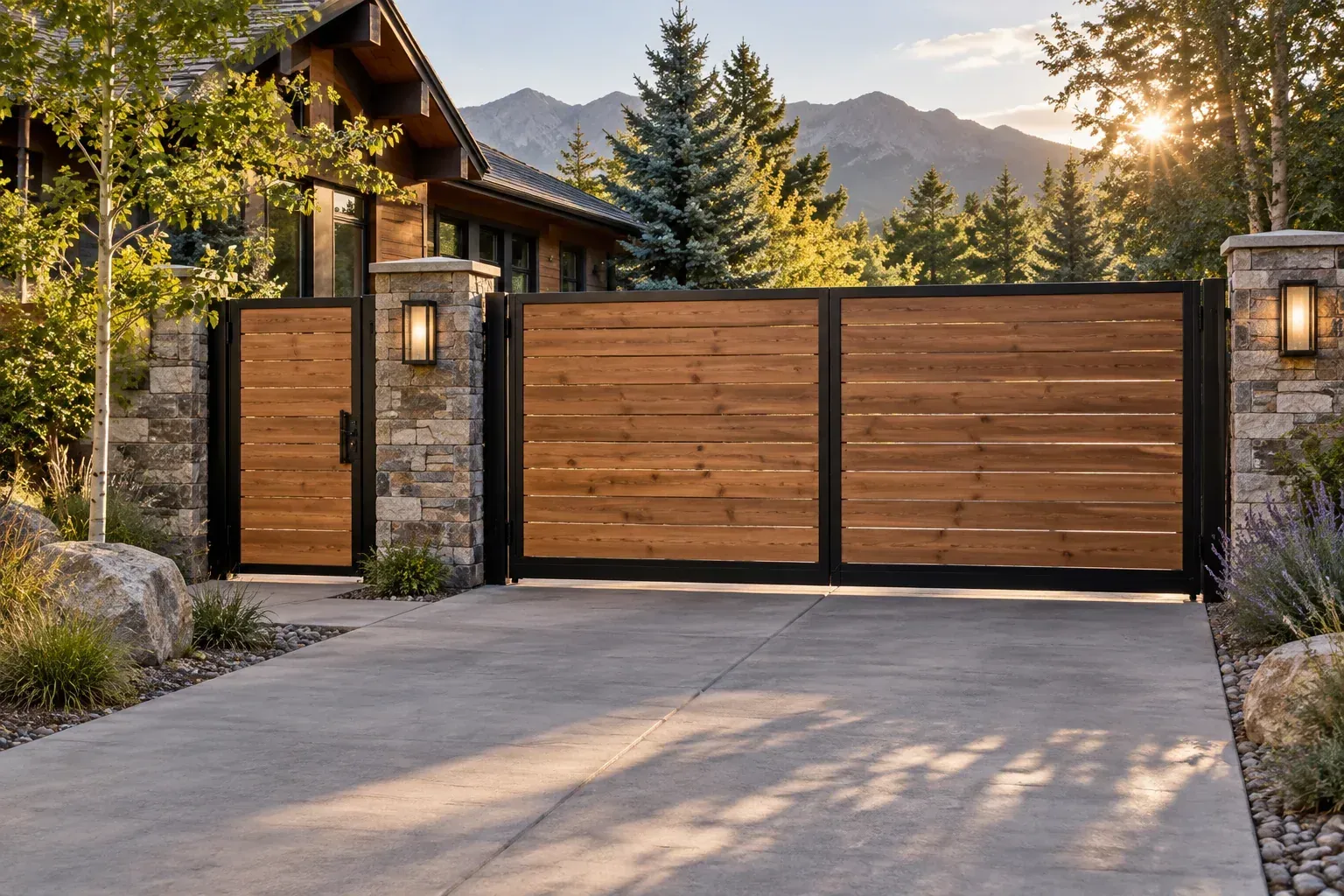
Yard entries, side gates, driveway openings, pet access, pool enclosures, and coordinated fence replacements.
Read the guideUndersized posts, weak frames, excess width, poor hinge geometry, grade conflicts, and mismatched latches are frequent causes of sag and unreliable closure.
Read the guideWidth, height, material, frame, posts, hardware, automation readiness, access control, grade, and tie-in conditions shape the project.
Read the guideOur process
We verify clear opening, swing or slide space, grade, post support, hardware, latch location, and the way people, pets, vehicles, or equipment will use it.
We review the fence line, grade, access, gates, drainage, privacy, pets, and the way the property is used.
We confirm materials, heights, posts, gates, removals, finish details, responsibilities, and pricing in writing.
The crew lays out the work, installs the system, checks alignment and hardware, and keeps the work area organized.
We test gates, review the completed fence, explain care and warranty information, and document any final adjustments.
Sag can result from an undersized frame, inadequate bracing, heavy infill, loose hardware, post movement, or excessive width. A durable gate begins with the opening, frame, posts, hinges, and latch planned together.
Swing direction depends on grade, walkways, traffic, property lines, pool rules, snow, and how the space is used. The gate should open fully without creating a hazard or crossing an inappropriate boundary.
Sometimes, but planning for automation early is better. Gate geometry, posts, operator type, power, safety devices, access control, vehicle clearance, and emergency access can all affect the original design.
Pedestrian gates are sized around daily use, while utility and driveway gates must accommodate equipment and turning movements. Wider is not automatically better because weight and leverage increase with the opening.
Often, yes, if the surrounding posts, rails, and material can support the opening. The existing fence may need reinforcement or new structural posts rather than simply cutting out a panel.
Tell us the opening width, material, users, grade, hardware needs, and whether future automation is being considered.