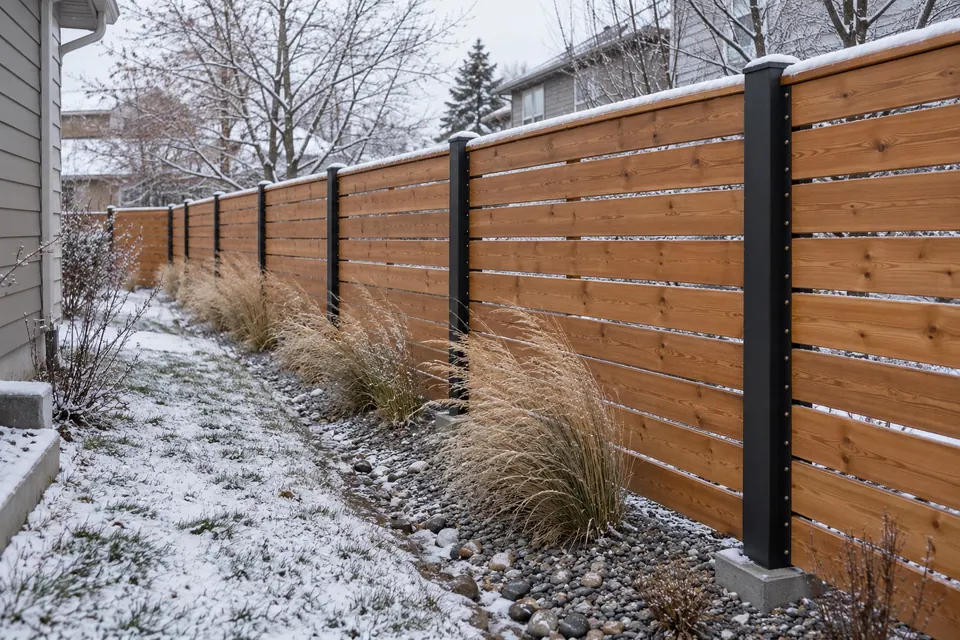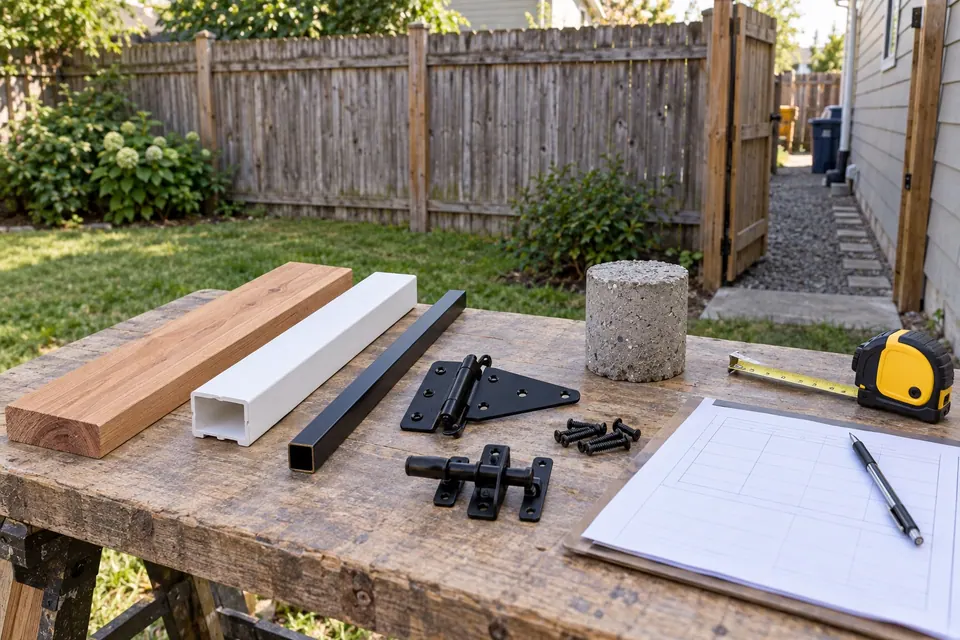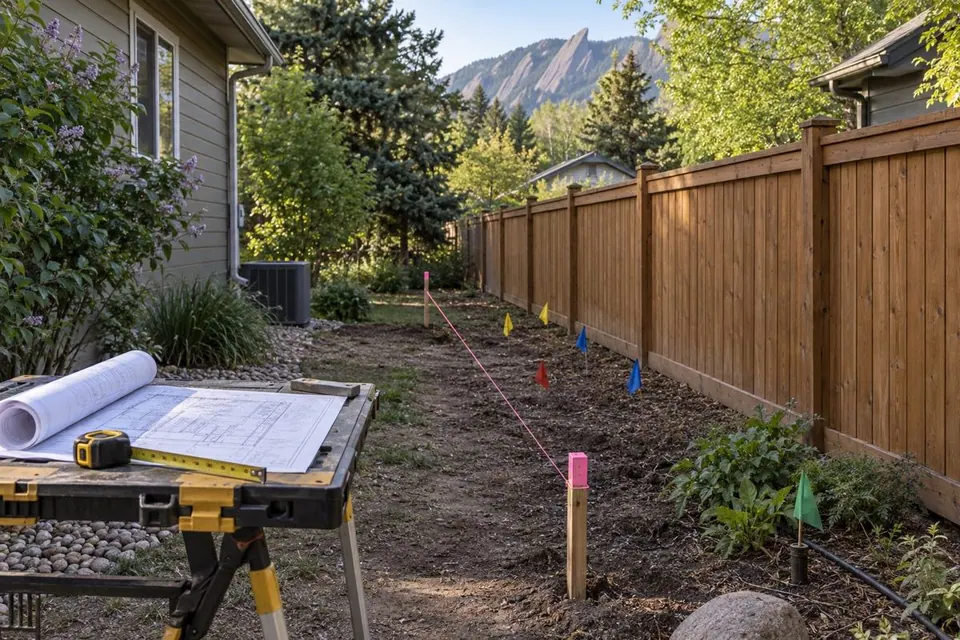
Why the fence-to-house connection matters
A combustible fence can collect windblown debris and create a path that leads directly to a structure. On an exposed property, the final section near the home should be treated as a transition zone—not simply the end of the same fence used around the rest of the yard.
Check the current local requirements first
The City of Boulder’s current Wildland-Urban Interface code information describes requirements for mapped WUI properties, including noncombustible fence and gate sections near structures. The city’s Urban Resilient Landscapes guidance also addresses noncombustible fencing and nearby landscape conditions.
Property location, adopted code, project type, and enforcement authority matter. Confirm the applicable map, distance, material, and review requirements with the authority having jurisdiction before design or installation. This article is planning guidance, not a code determination.
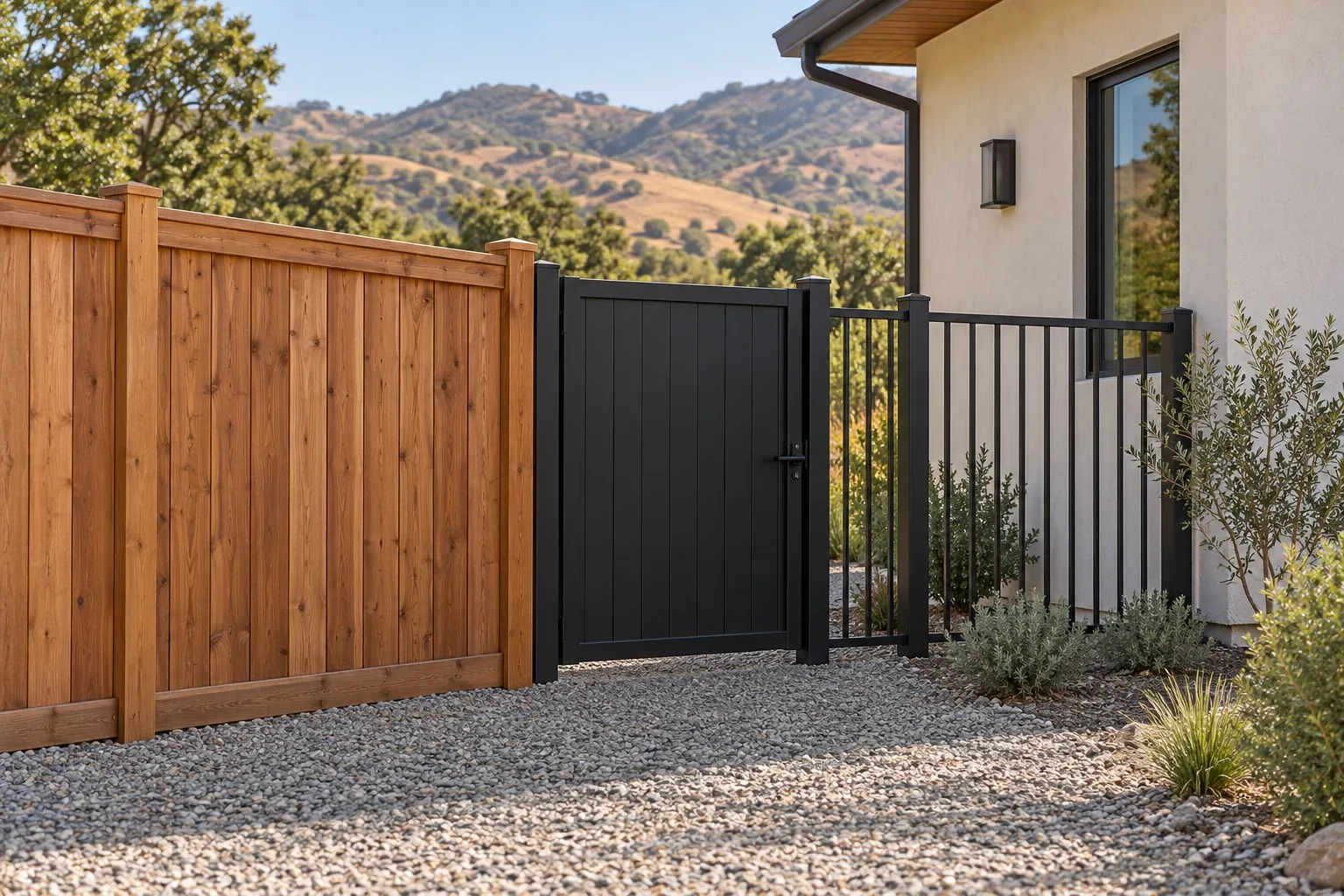
Use an intentional noncombustible transition
A metal fence or gate section near the structure can interrupt a continuous combustible run. The transition should be long enough and detailed as required by current rules, securely integrated with the rest of the fence, and coordinated with doors, paths, utility equipment, and emergency access. Avoid creating a narrow debris trap between the fence and the wall.
Review aluminum fencing and gate systems as potential components, then confirm that the exact product and installation satisfy the project’s requirements.
Material is only one part of the assembly
A noncombustible panel attached to combustible vegetation, stored materials, wood mulch, or accumulated leaves does not solve the whole condition. Look at the posts, gate, hardware, adjacent screening, ground surface, plant spacing, and connection to the house as one assembly.
Maintain the zone over time
- Remove leaves, needles, tumbleweeds, and other debris that collect along the fence.
- Keep vegetation managed according to the property’s defensible-space plan.
- Avoid storing firewood, bins, furniture, or combustible materials against the fence or structure.
- Inspect coatings, fasteners, gates, and connections after weather or impact damage.
- Revisit the transition when landscaping, decks, additions, or access routes change.
Design the combustible portions with care too
A noncombustible transition near the house does not make the rest of a wood fence irrelevant. Avoid details that trap leaves and needles, keep the lower edge and adjacent ground maintainable, and provide access for routine debris removal. Where the fence crosses changing vegetation zones, consider whether additional noncombustible breaks or gates would support the broader plan.
Open metal and solid wood can be combined without looking improvised when post rhythm, height, color, and cap details are coordinated. A deliberate transition can serve both wildfire strategy and architecture instead of reading like a last-minute code patch.
Coordinate the fence with the whole property
Wildfire resilience is not created by one fence detail. Coordinate with the home’s roof, vents, siding, decks, landscape zones, access, water resources, and evacuation plan. For a broader regional framework, read the Front Range fence design guide.
Questions for the design conversation
- Is the property in a mapped WUI or another regulated area?
- Which authority and currently adopted requirements apply?
- Where should the noncombustible transition begin and end?
- How will the gate, ground surface, and vegetation support the strategy?
- Who will maintain debris and vegetation clearances after installation?